


Inspired by minimal Persian lamps, I created my own product family of louvred persian light pendants.

When a light source is placed inside, you cant see the source, but only the diffused light leaking out of each louvre/fin.


By Aneesh Carvalho , Xiao Jing and Dineet Sapra
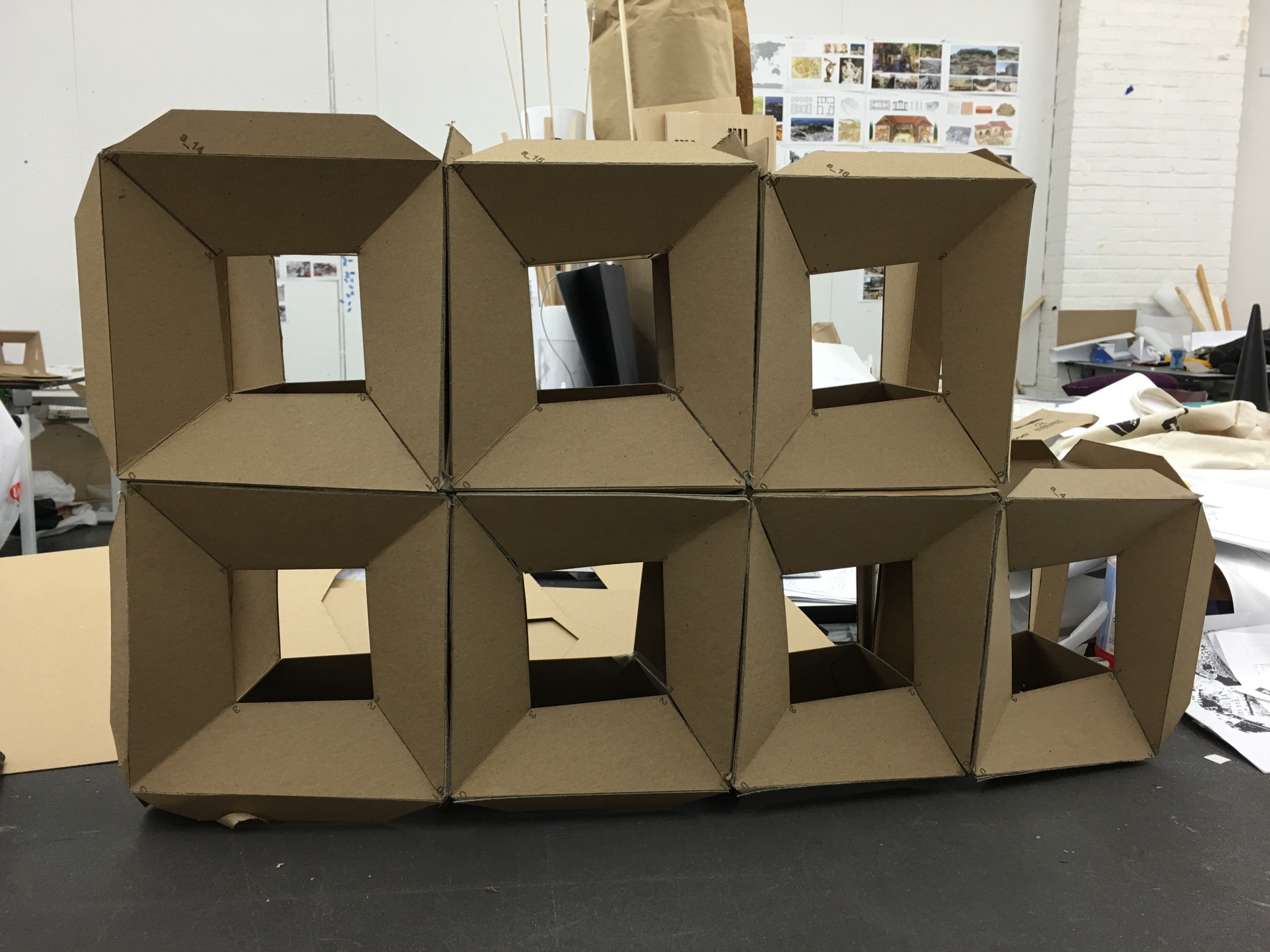
The project is inspired by the Warehouse renovation project by Archi Union Architects in Shanghai. We explored the gradual rotations of each brick block so that when built as a wall, it produces wave patterns.
The grasshopper definition includes a graph mapper that governs the curvature of the wall, so that different configurations can be analysed to reach a structurally stable curve wall. the rotation of each brick is computed by the “sine” mathematical function.
Each iteration provides a varying degree of privacy which can be manipulated by the variables in grasshopper as per the design requirement.
The main challenge for this project was the structural stability of each iteration. The material we used was 2 ply chipboard, which when joined together to form a 4-sided box, raked to the sides because of lateral forces. However, the varying rotation angles formed by the stacking of bricks provided stability to the finished wall.
A greater amount of structural stability can be achieved by using materials like wood for the indivual building blocks.

Presentation with design variations:
https://docs.google.com/presentation/d/1wQCw3K52fl5IktG_WUdjjBaNQcYuahMDkBs7-rKHx5A/edit?usp=sharing
Our team’s privacy screen was inspired by static partitions that appear to have movement through their organic and undulating forms. An important design consideration for us was that our screen not only provided privacy but varying levels of privacy from different view points, therefore adding to the sense of movement and creating variation in the overall screen composition.
We faced many challenges in getting our definition to work successfully. While it seemed to work on Grasshopper, we printed numerous test models only to find out that this was not the case when attempting to assemble the individual cell components. Surfaces that were supposed to go together according to the definition did not match up. We spent most of the project trying to resolve this through trial and error and really working through the definition to identify the problem. We were beyond thrilled when we finally resolved the issue and our model pieces actually fit together! The definition finally worked!
Because of the problems we encountered and the length of time it took to resolve, we ultimately ended up with a very simple definition with two design variables: cell count and input surfaces. We experimented with numerous surface types and cell counts and found that a curved surface with a higher cell count was best to achieve the different privacy levels we wanted.
While our final screen does not have the type of movement and undulation as the partitions that initially inspired us, we were able to produce a screen that has the varying levels of privacy that we intended. Overall, our team is very happy with our final project and proud of the challenges we overcame and the work we accomplished.


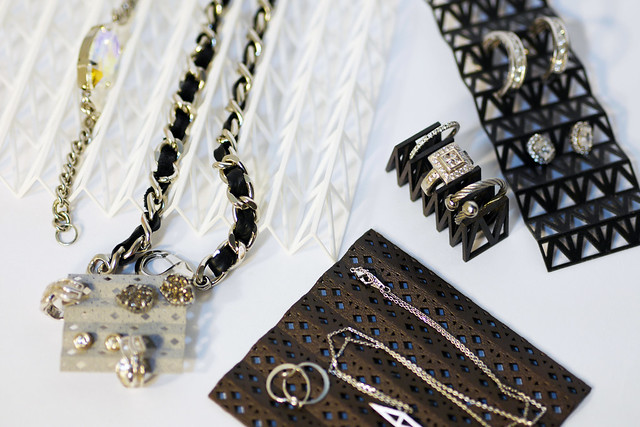


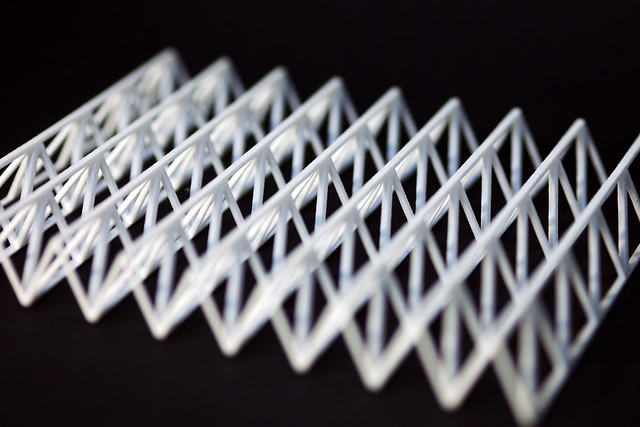

My tea light diffuser arrived from Shapeways. The material that I choose is white flexible plastic.
The final presentation file and video were uploaded in the link below.
https://drive.google.com/folderview?id=0Bzu4d0q6yxxuT2xIaXVvRFlVeDQ&usp=sharing

Group Members: Junyu Cao, Wanting She and Qiao Ding
We have started to assemble tesseracts. 1/32″ chipboard is more rigid (not flexible) than we expected..


 Parametrics

You must be logged in to post a comment.