This is Katie (Sha Huang).

This is Katie (Sha Huang).
This is Li Zhuang.

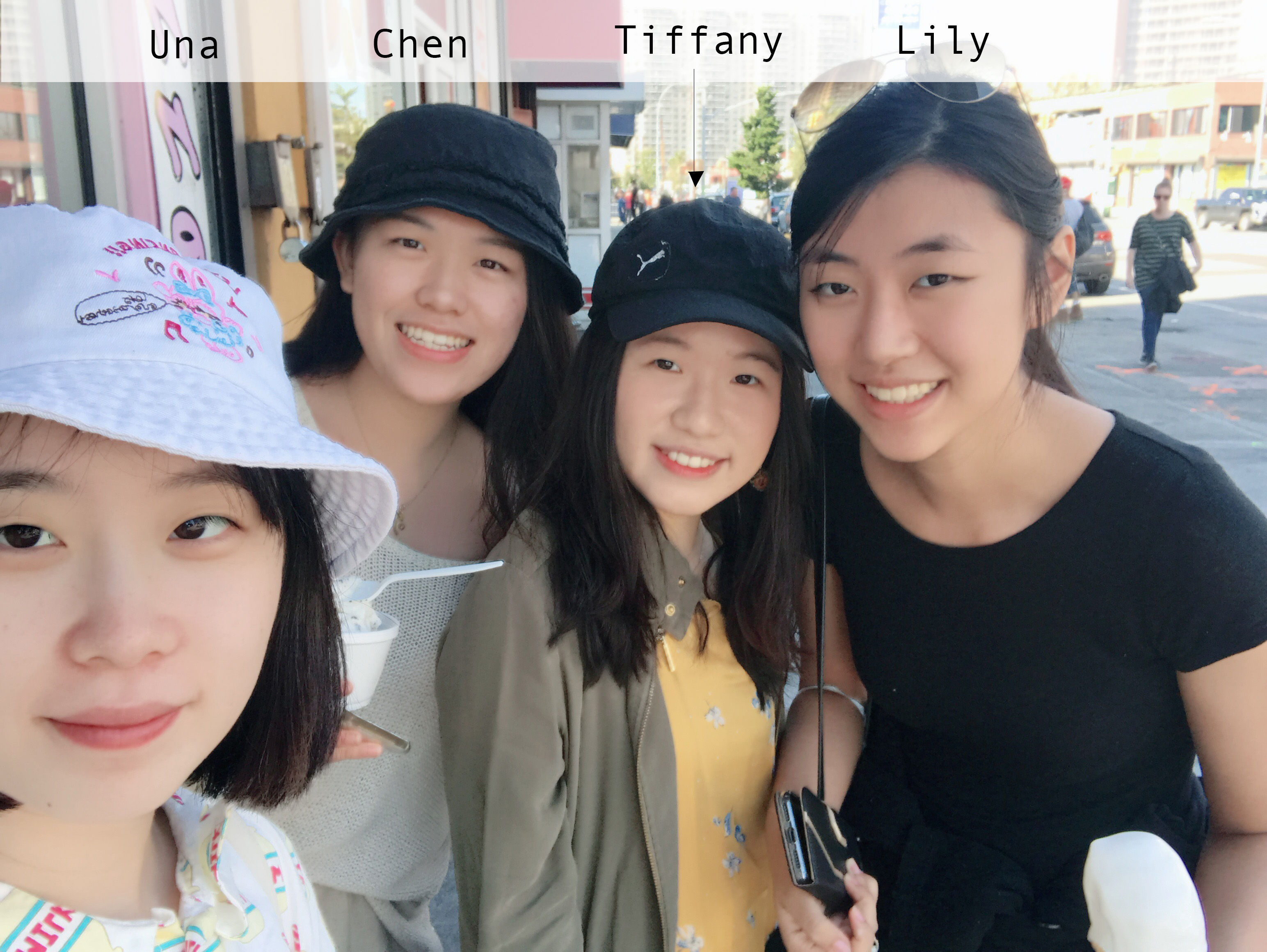
This is Tiffany (Tak Ying Chan)..third from the left. All of us are in this class :)
My Name is Qixin Zhang.
The first project of the Spring 2019 term – Product Families – can be found online here:
https://docs.google.com/document/d/14C6F_z-RjN_17_NrBGlwnzERHagXkJ0j8pj-0wEvxOI/edit?usp=sharing
The syllabus for the Spring 2019 run of Parametrics can be found online here:
https://docs.google.com/document/d/10LABlopnrV1WxtmLwcwu3AfhAS06o9aSJvEaD1X4Bus/edit?usp=sharing
PROJECT STATEMENT:
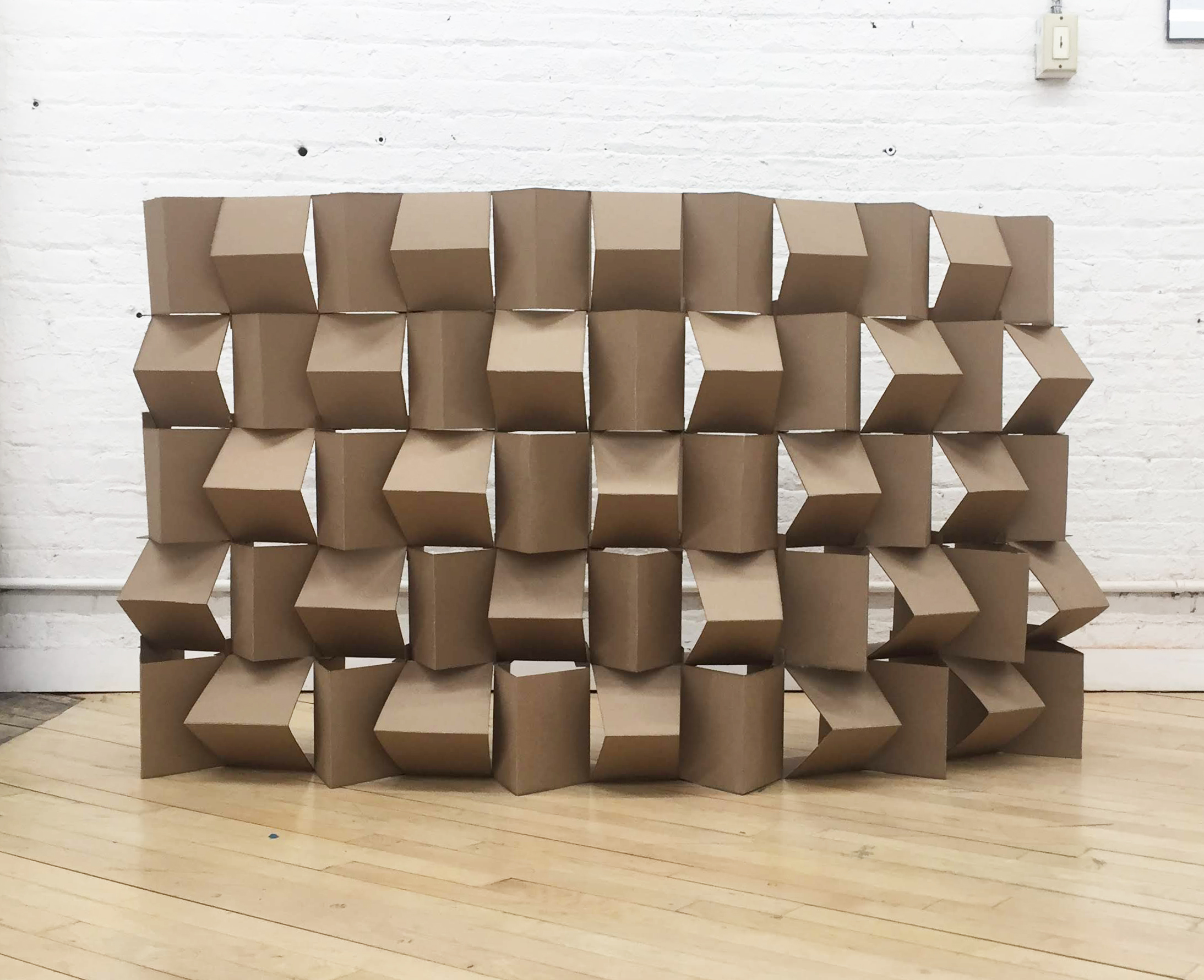
“Kneel and Peek” is a privacy screen for kids that its intent is to create a playful environment. The child in once side of the screen could walk, kneel and lay down and peek to see what is at the other side of the screen. Creating a similar action like hide and seek. At the other side of the screen the joinery of the components create a grid. In this area kids can place their toys and used this is as a display area. Creating this display the kids will know what toys they have or what could they play with while peeking through the privacy screen.
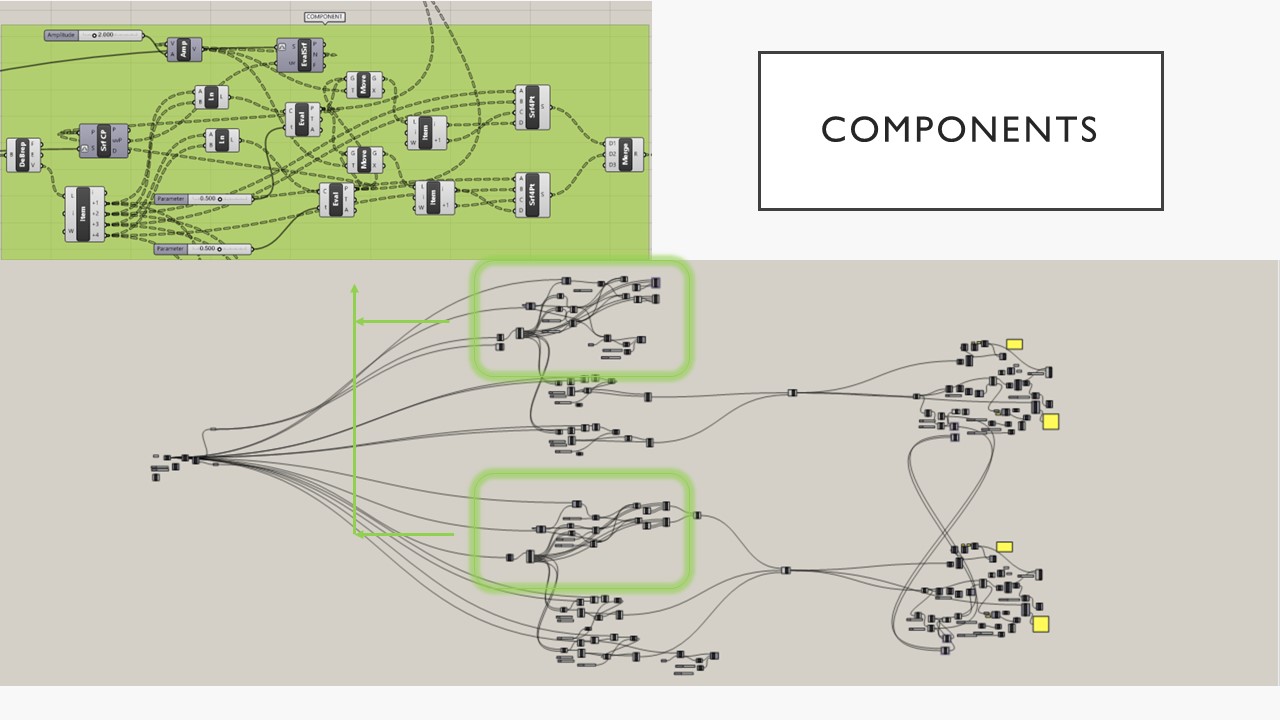
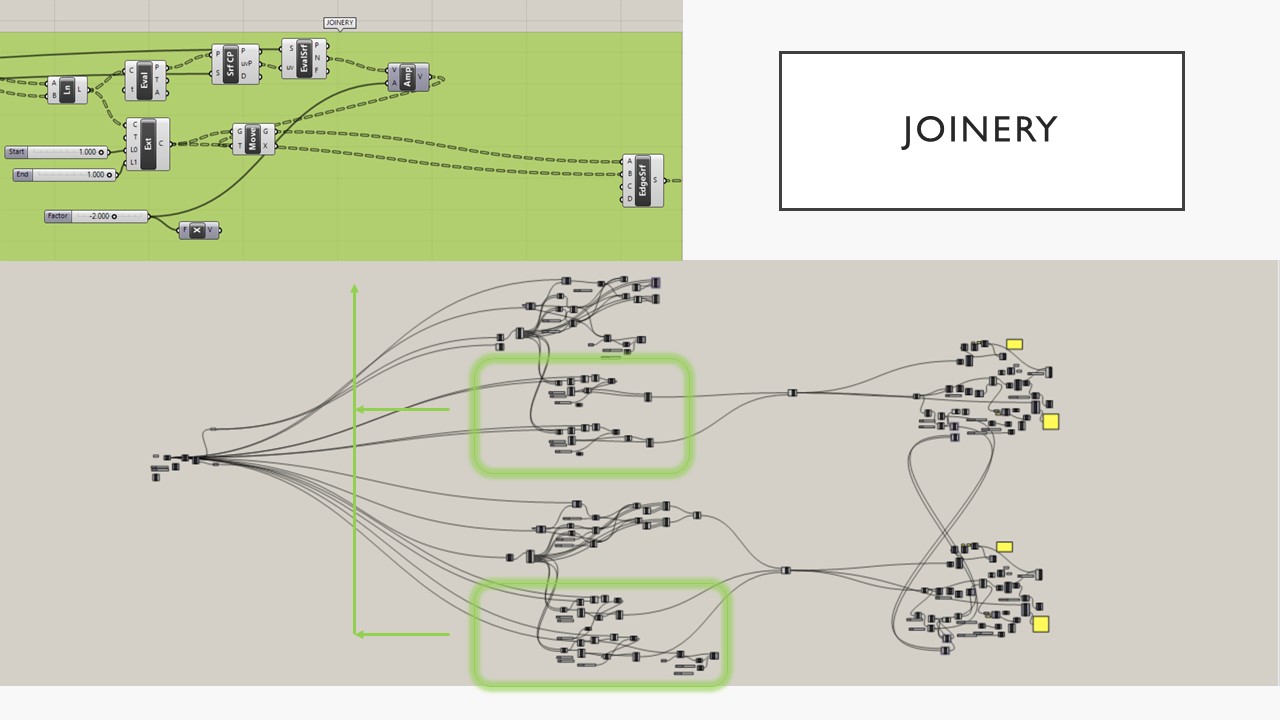
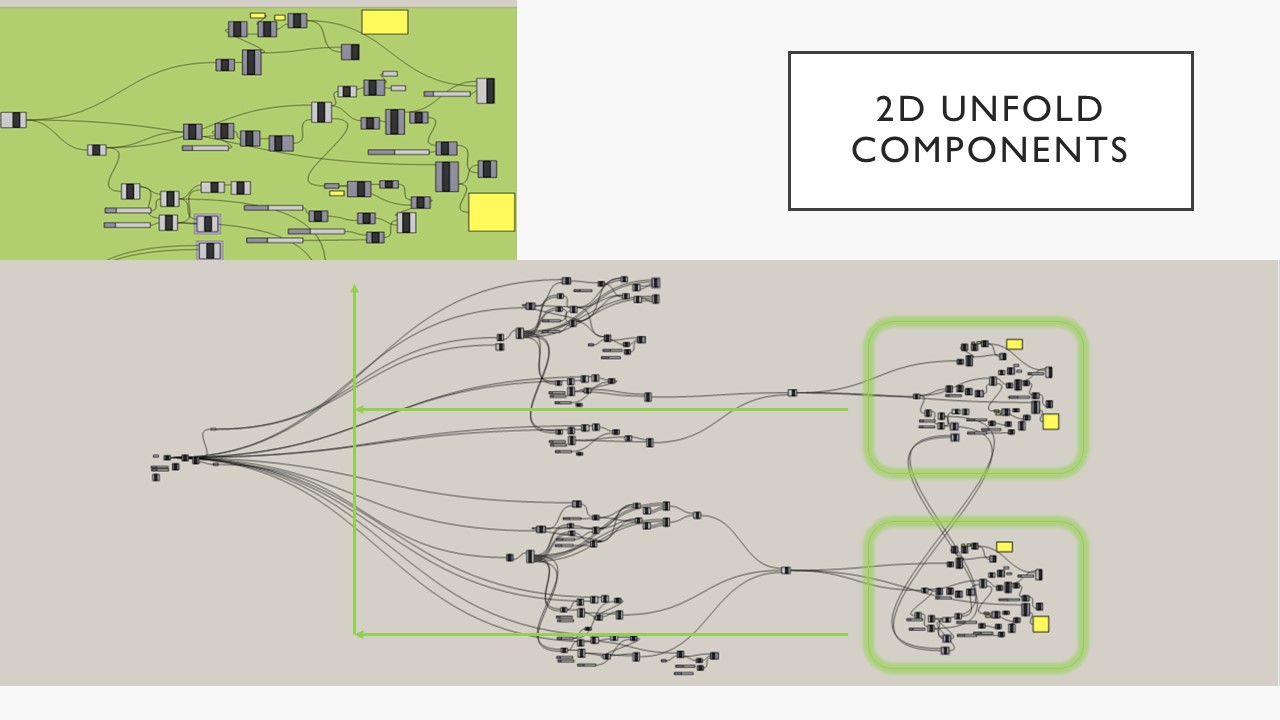
The wall is created by two set of components. One component creating a fold horizontally and the other creating a fold vertically. The variation consists on the extension of the components and the extension of the joint connector. The other variation consist on the number of components on the rows and columns of the wall. With different variation the wall could create the right about of privacy for the child that peeks through it.
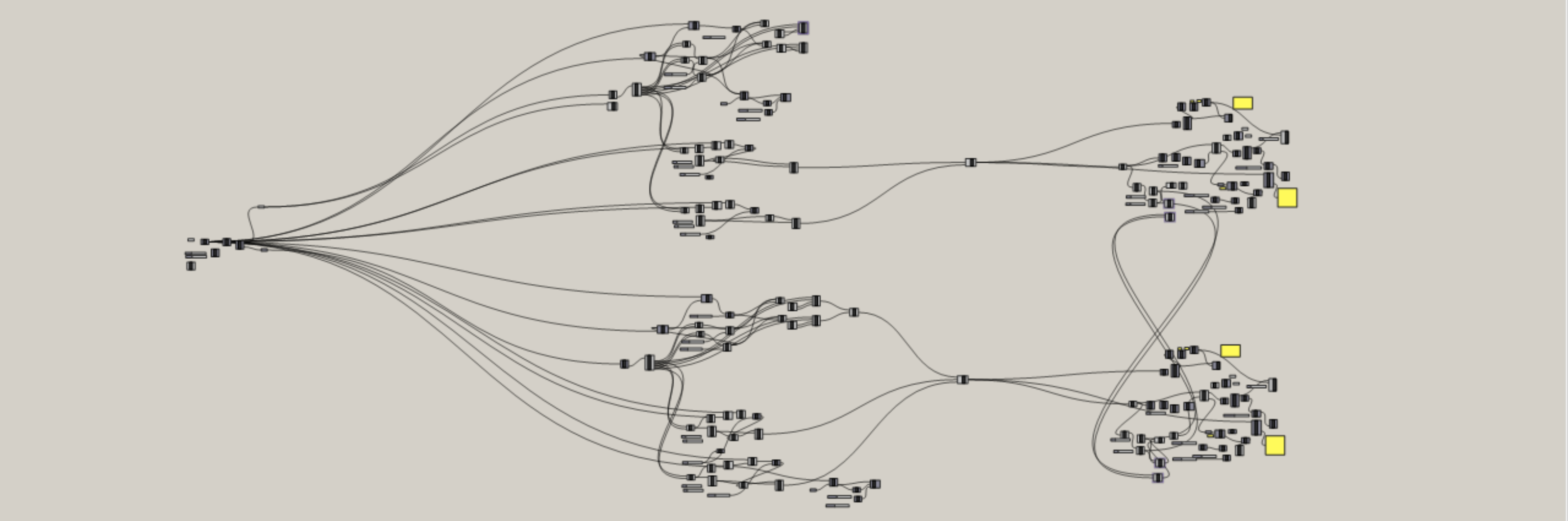
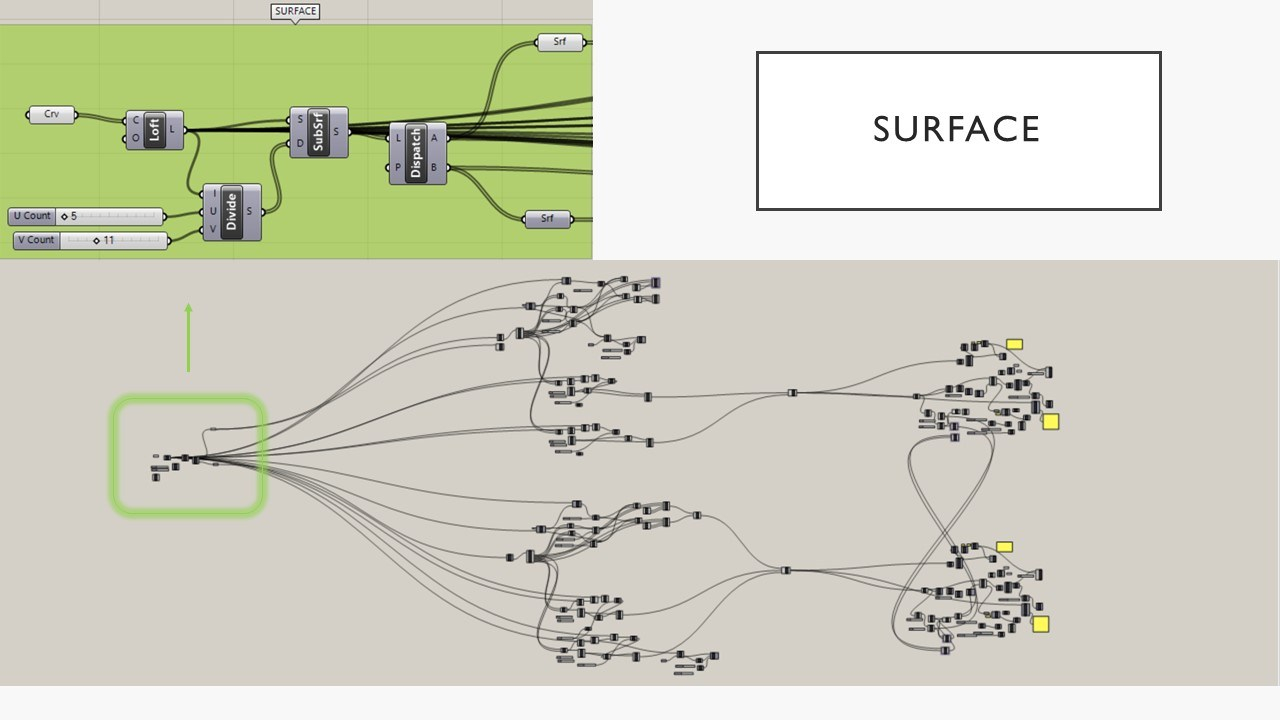
GRASSHOPPER DEFINITION
KEY PARAMETER
COMPONENT VARIABLE EXTENSION VARIABLE
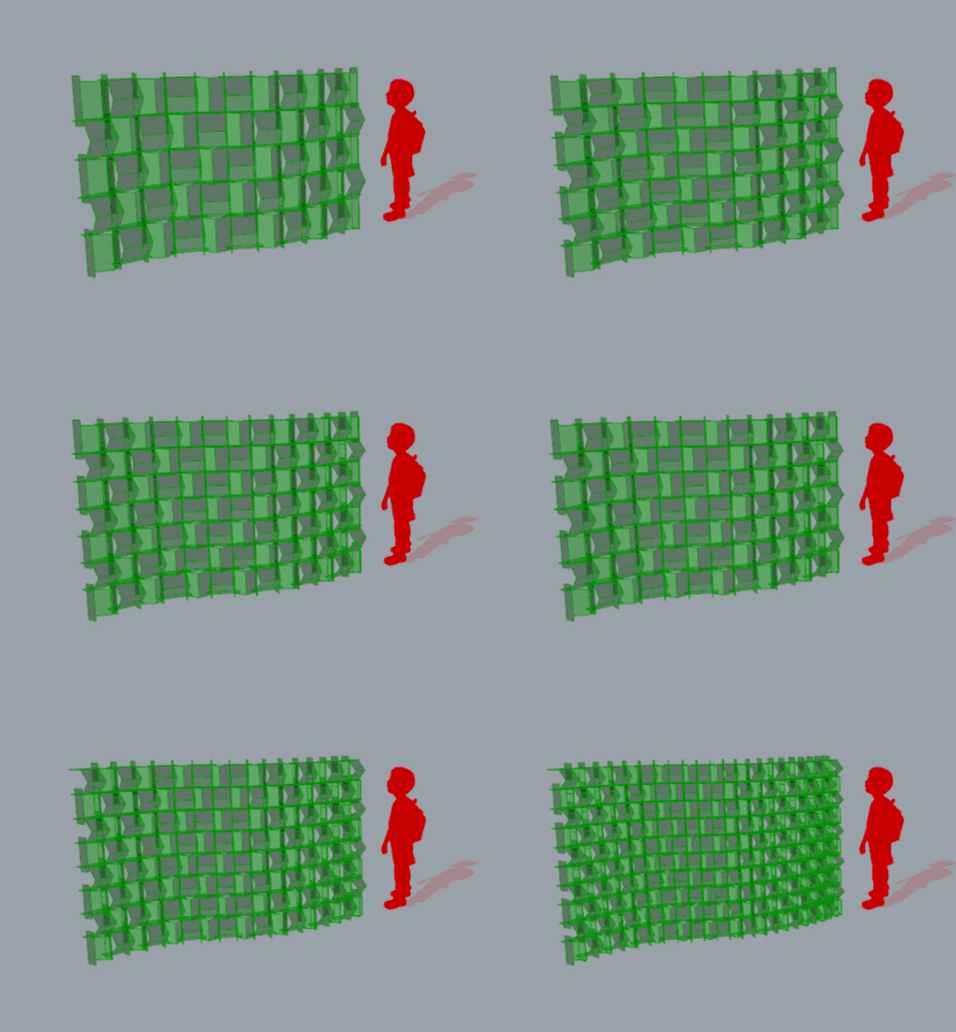
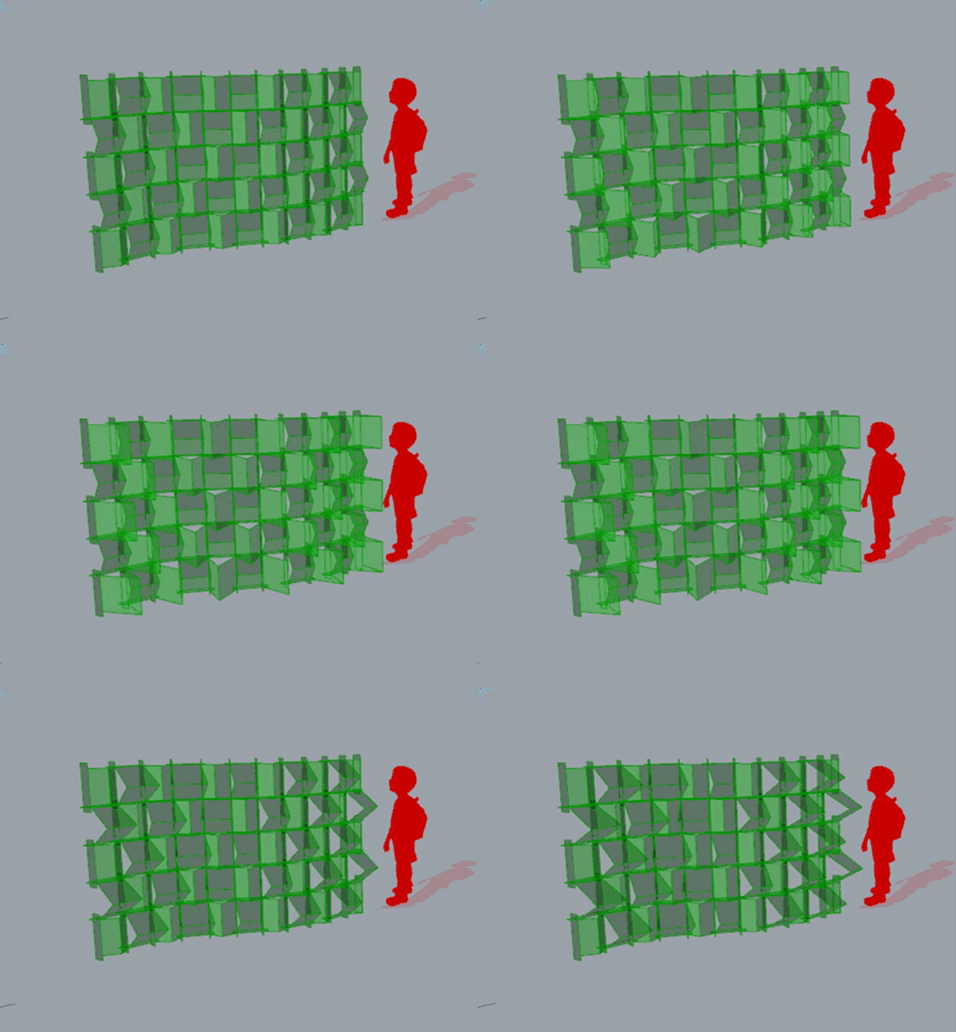
FAMILY MATRIX

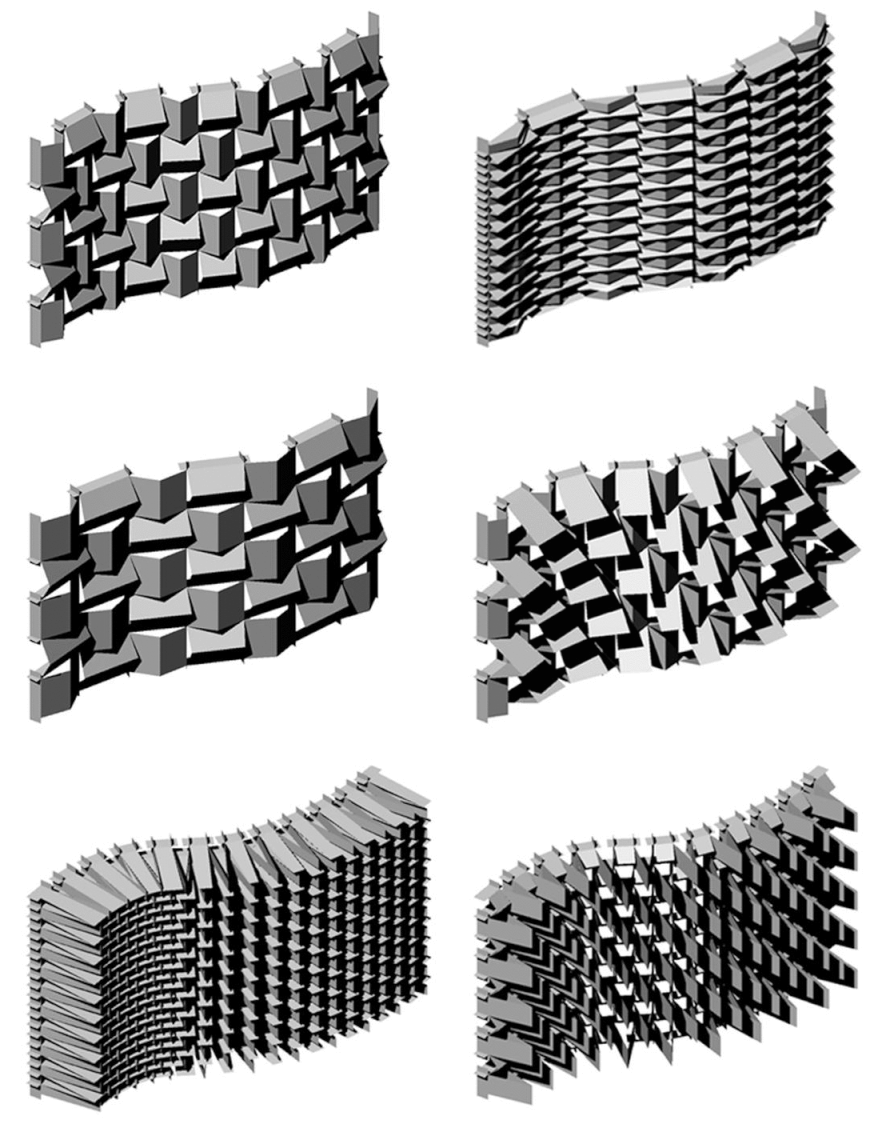
STUDY MODELS


FINAL MODEL


Presentation: PrivacyScreenPresentation_ElizabethGomez
Design Explorer: PrivacyScreen_DesignExplorer
PROJECT STATEMENT:
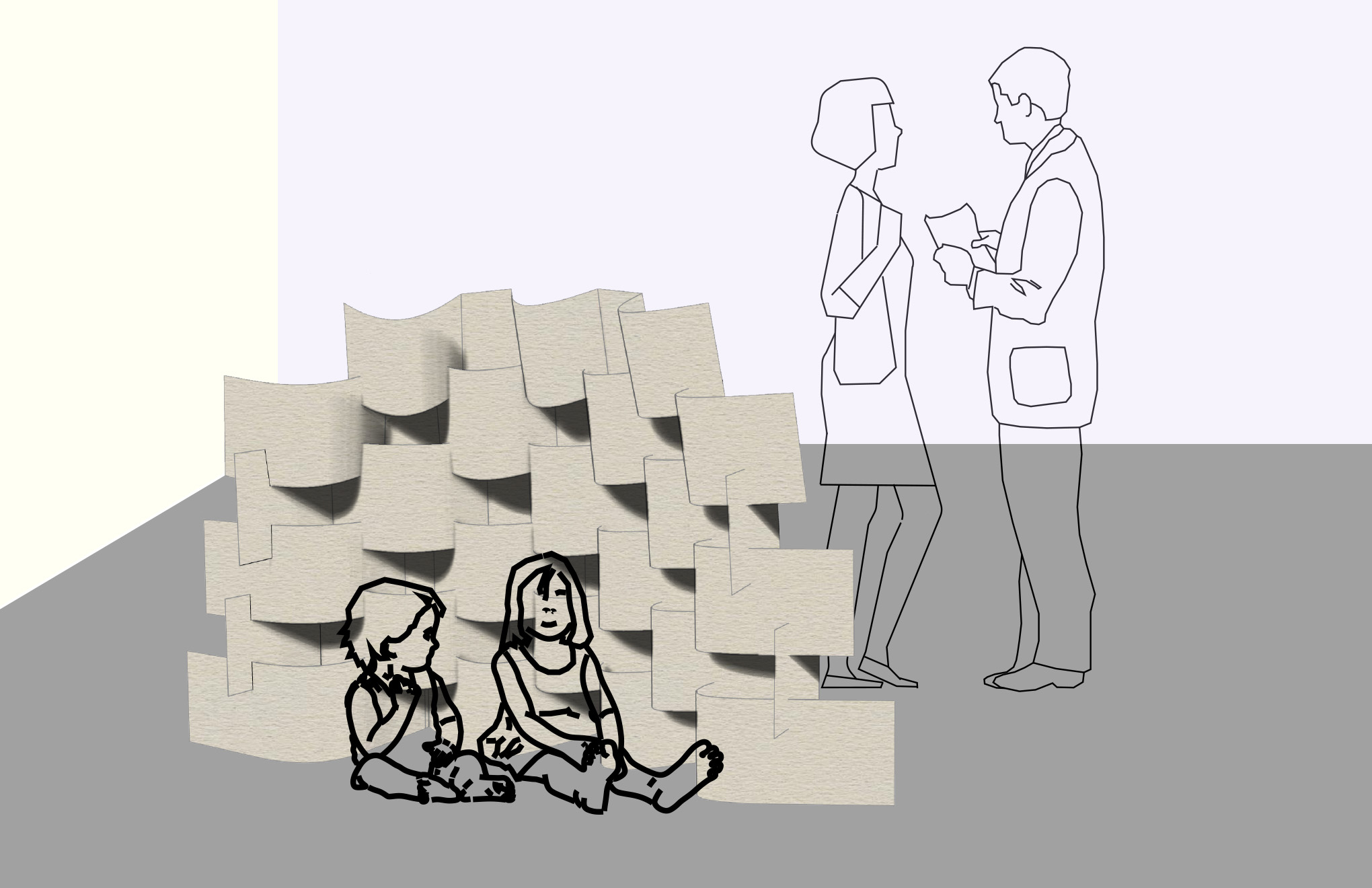
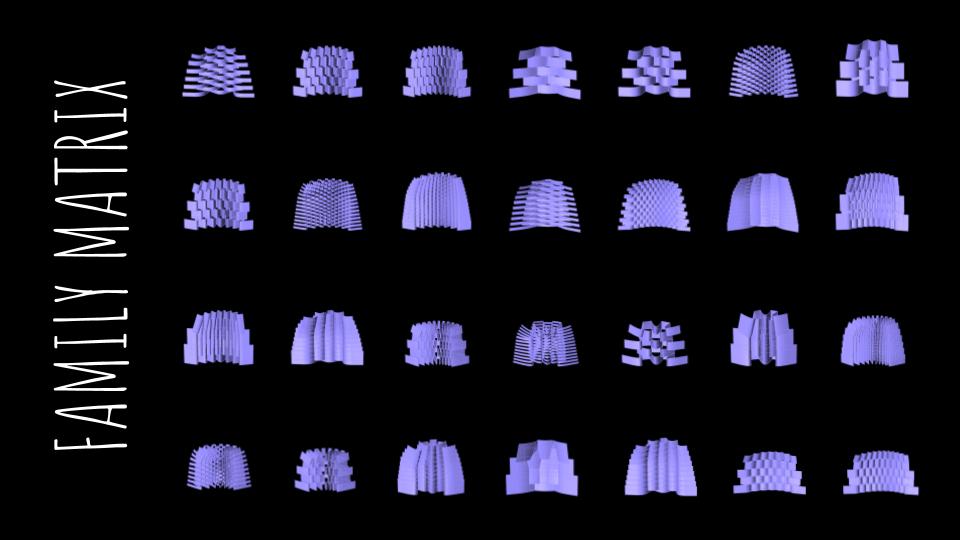
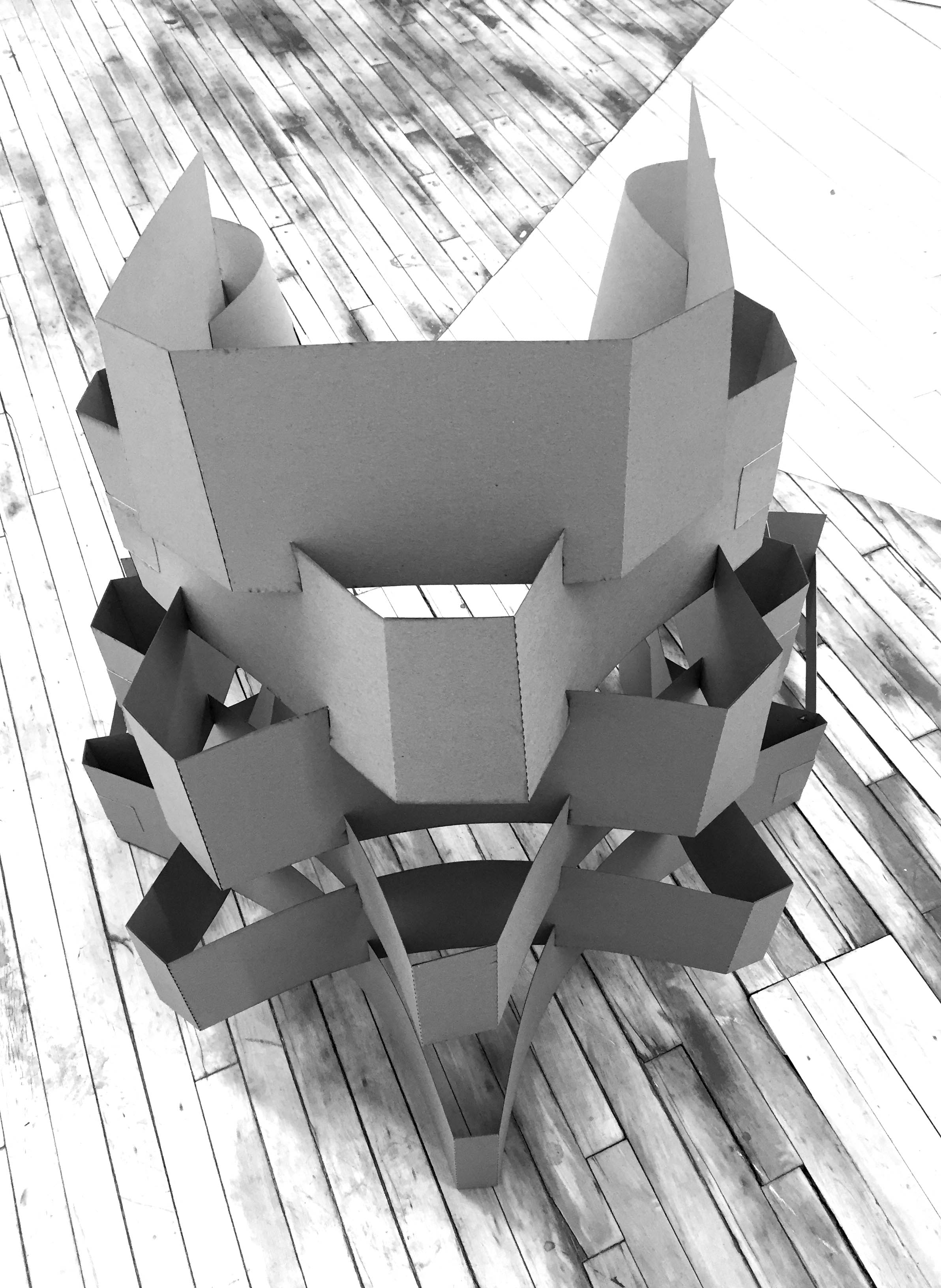
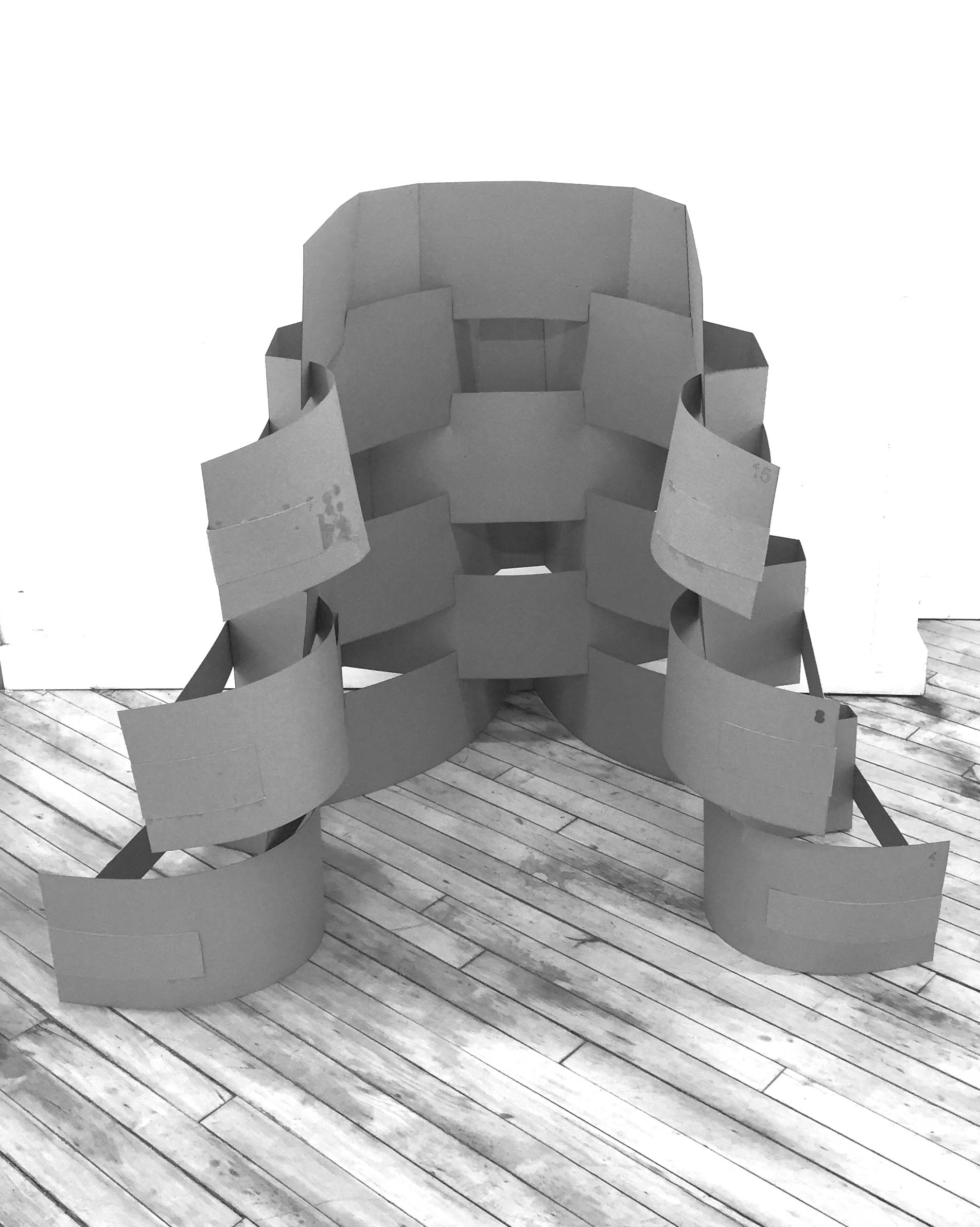
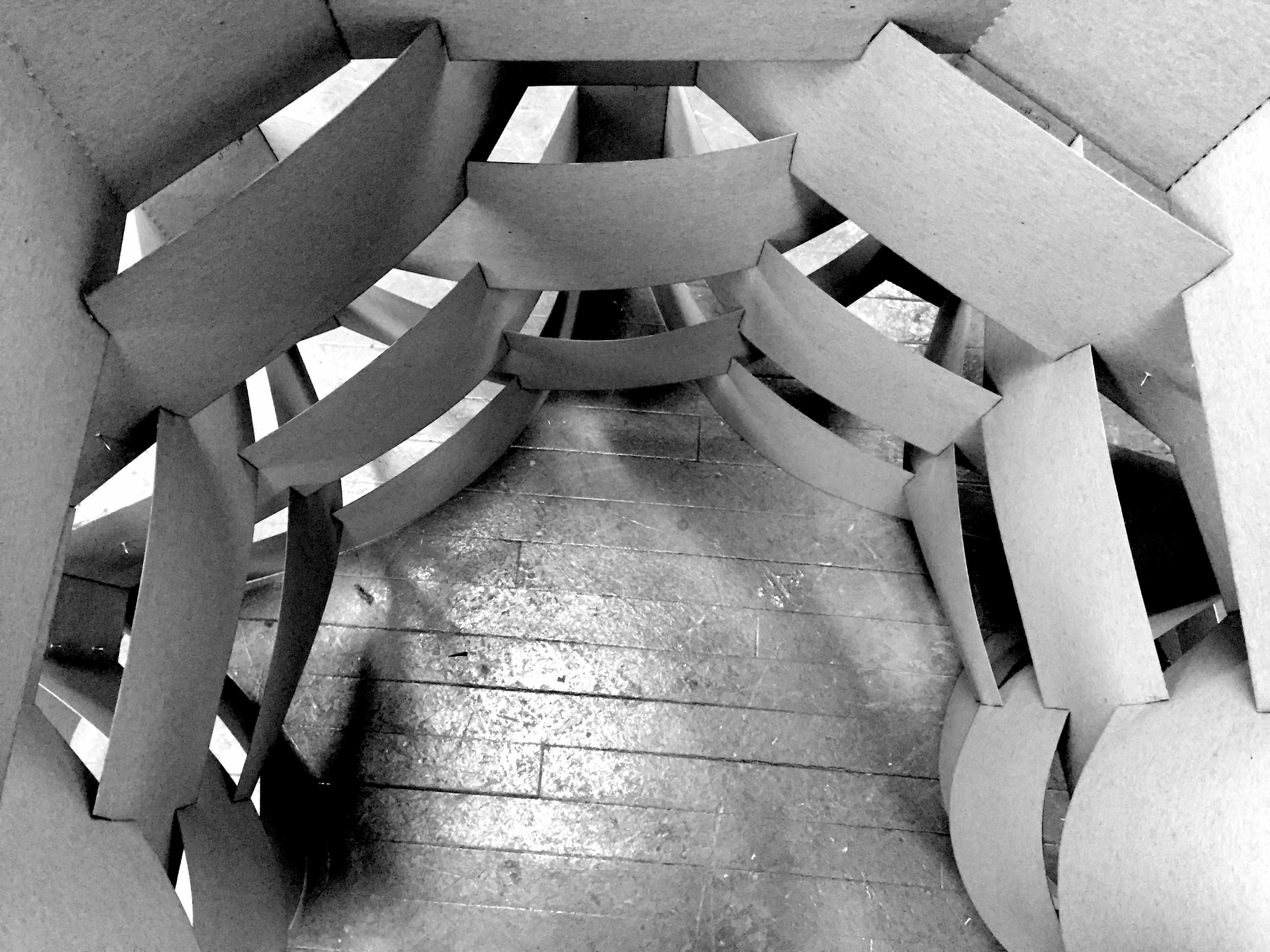
The Nest is a privacy screen that curves in order to give the child the feeling of a hug, or safety. The limited visibility from the child’s view gives them some visual continuity, but mostly privacy, while the parents can watch their child from the other side of the screen that allows for much more visibility and security.
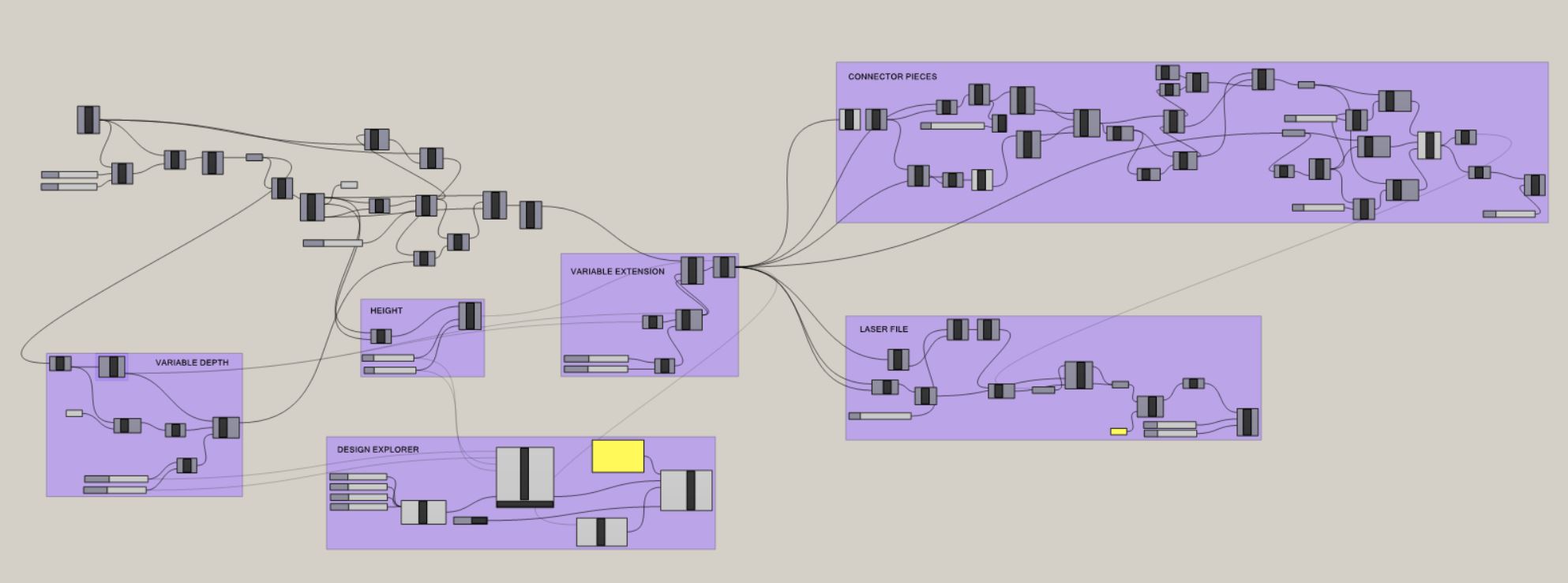
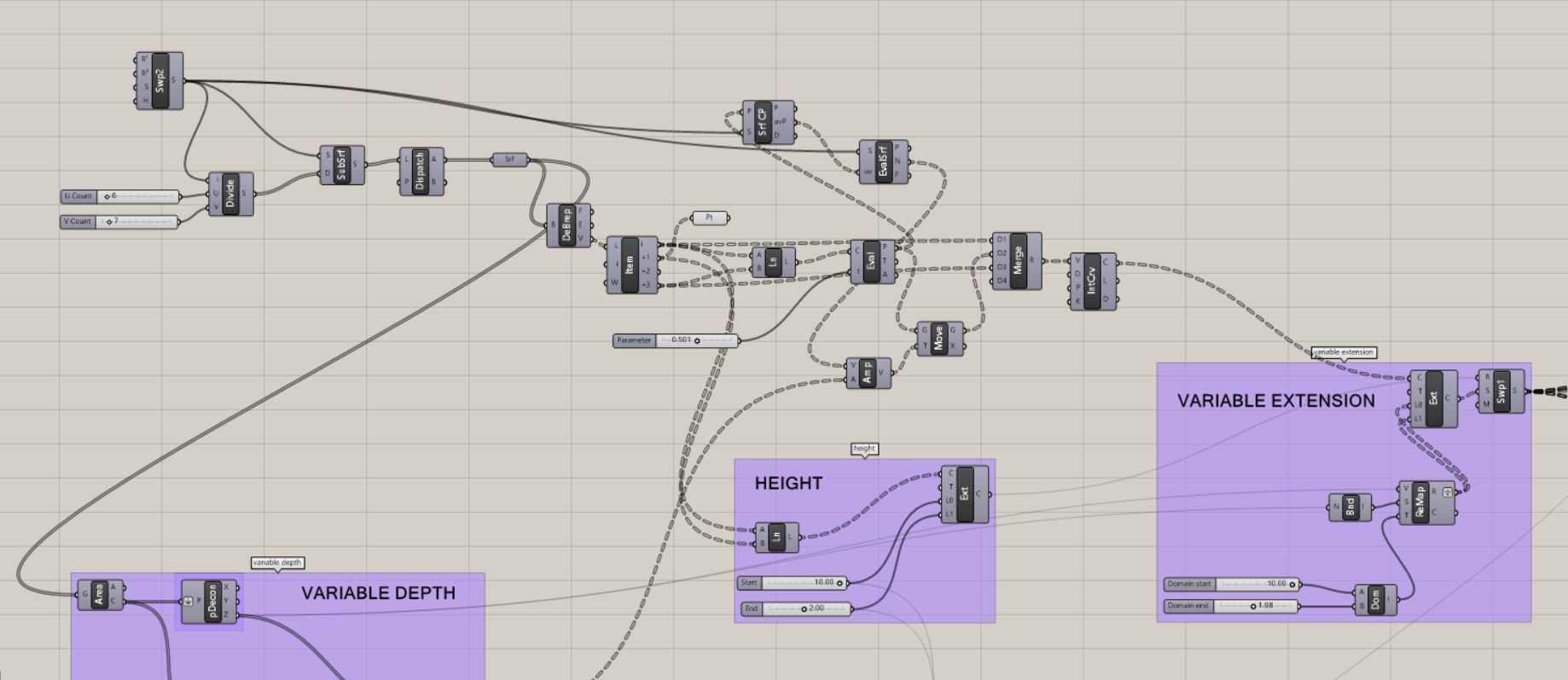
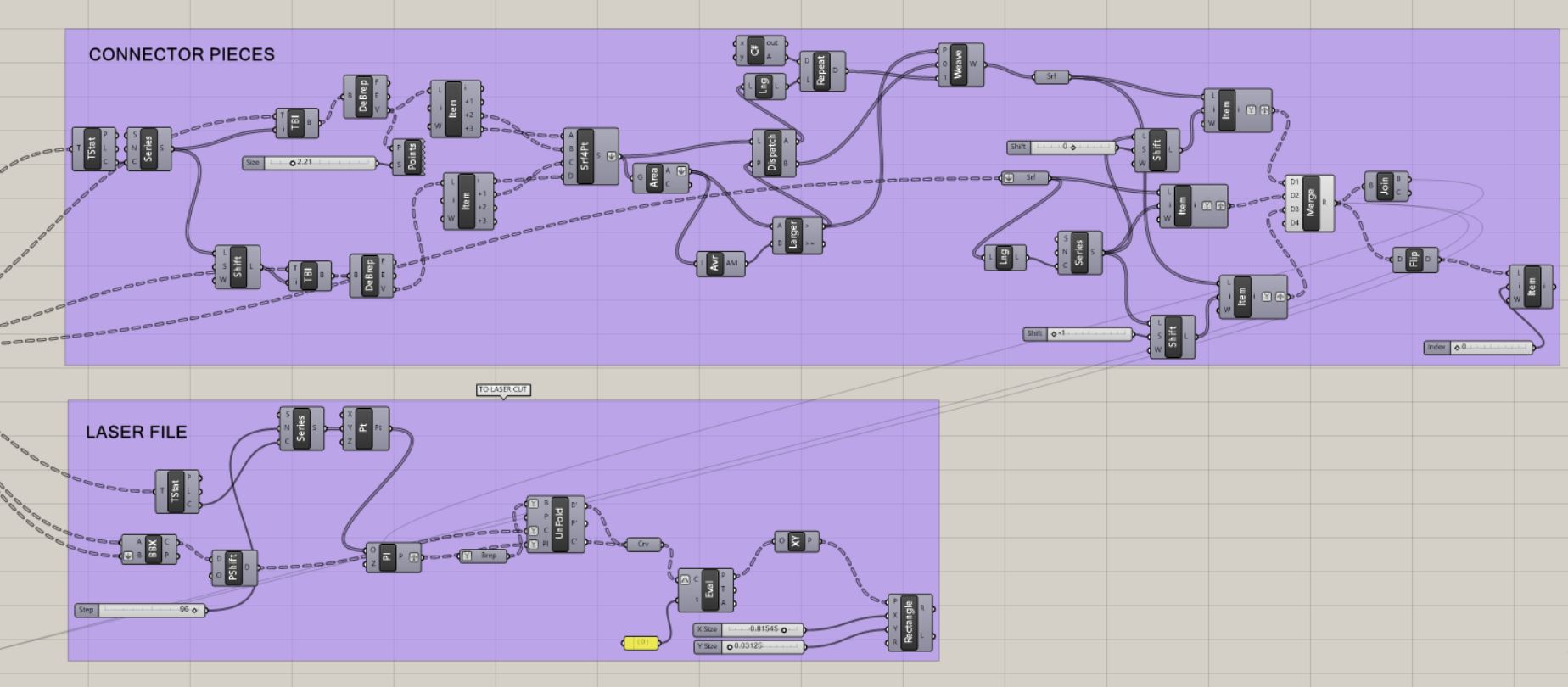
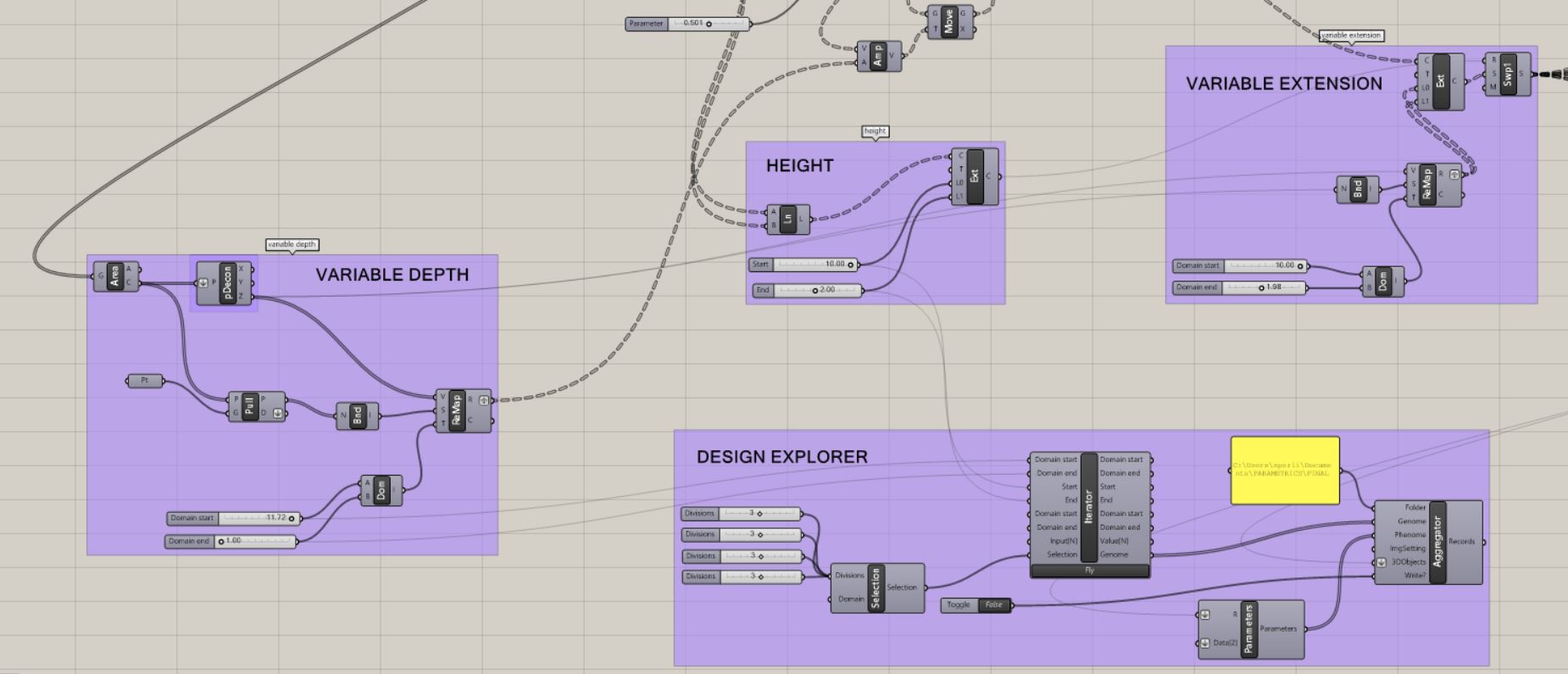
The screen is composed of components that connection through notch and lap joints. The variations have to do with height, depth, extension, and division of the grid.
GRASSHOPPER DEFINITION:
FAMILY MATRIX:
FINAL MODEL AND DETAILS:
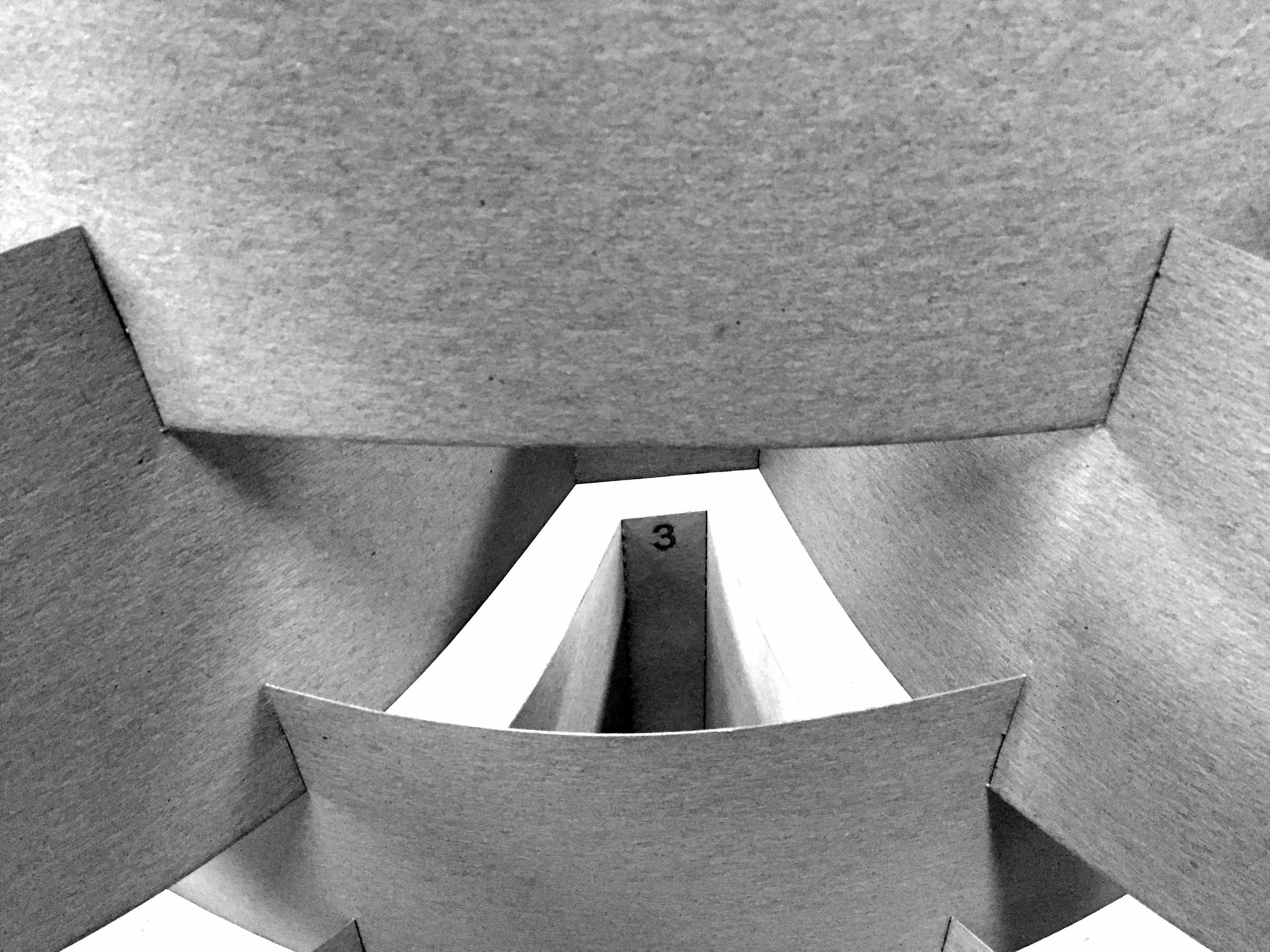
PROCESS MODELS AND SKETCHES:
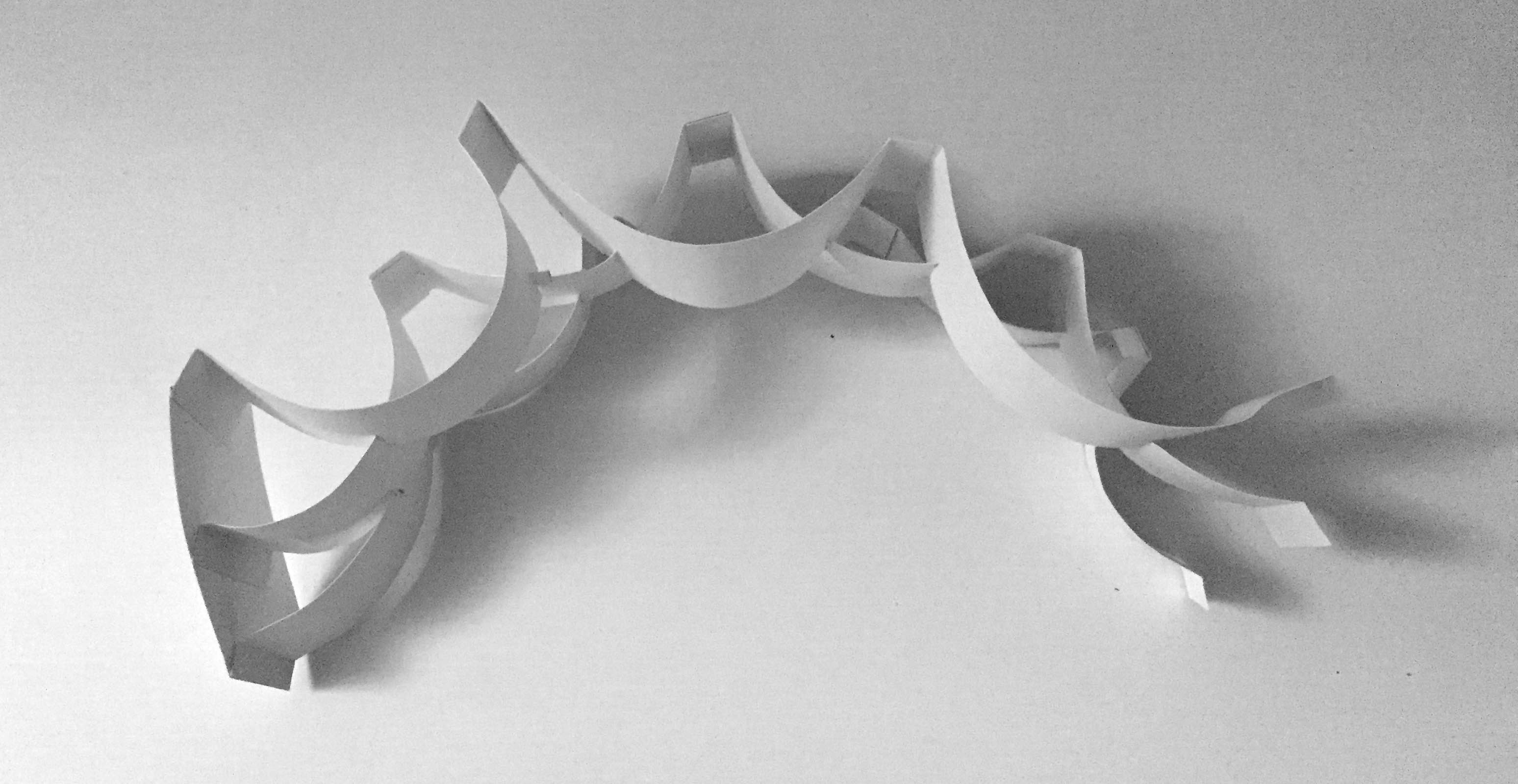
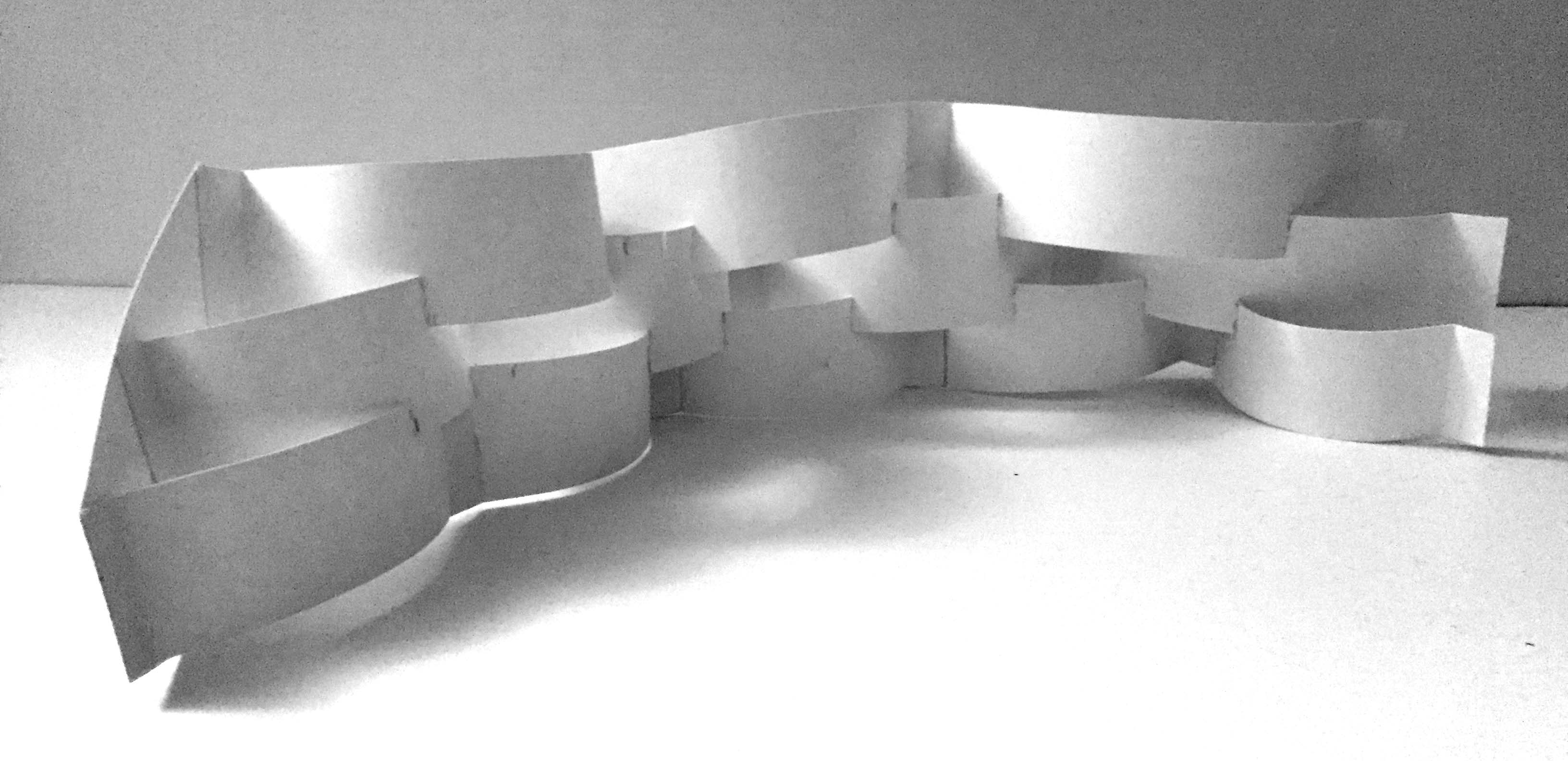
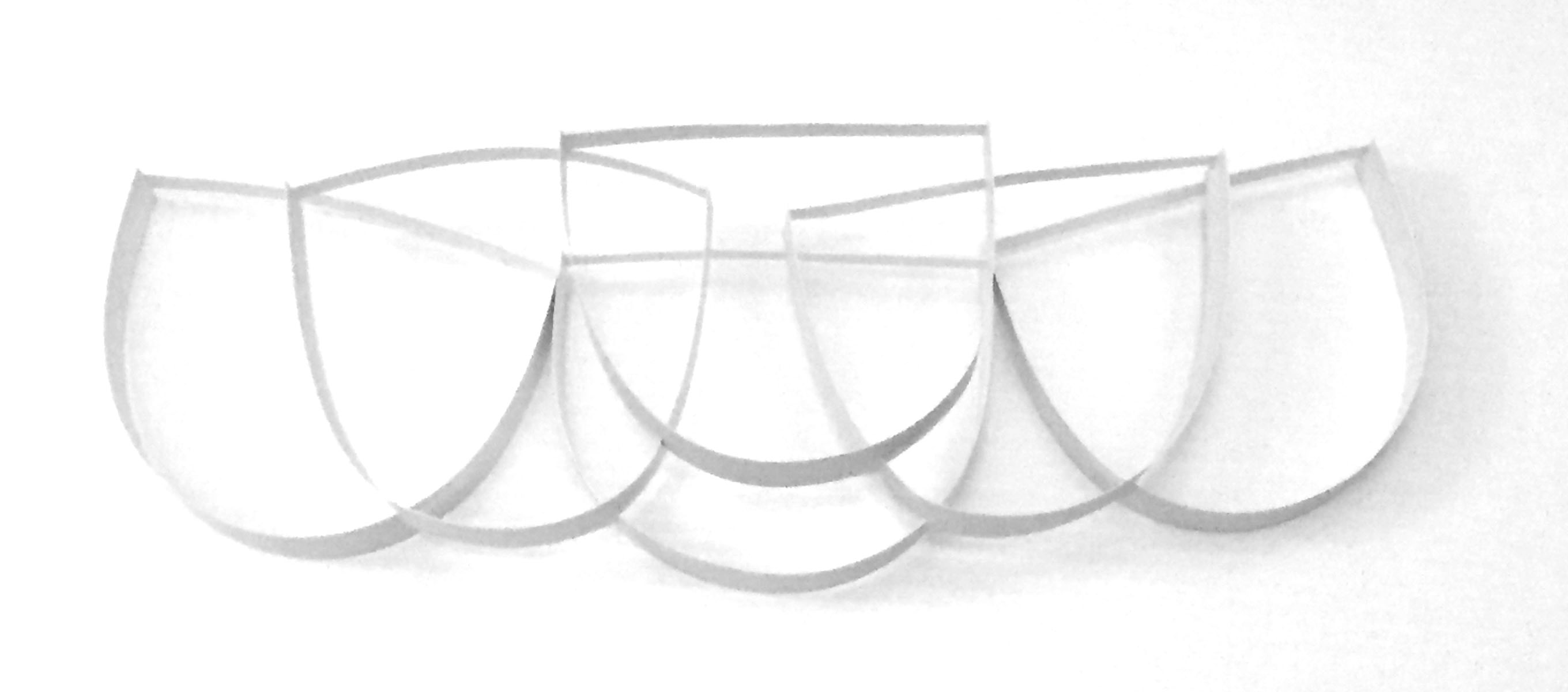
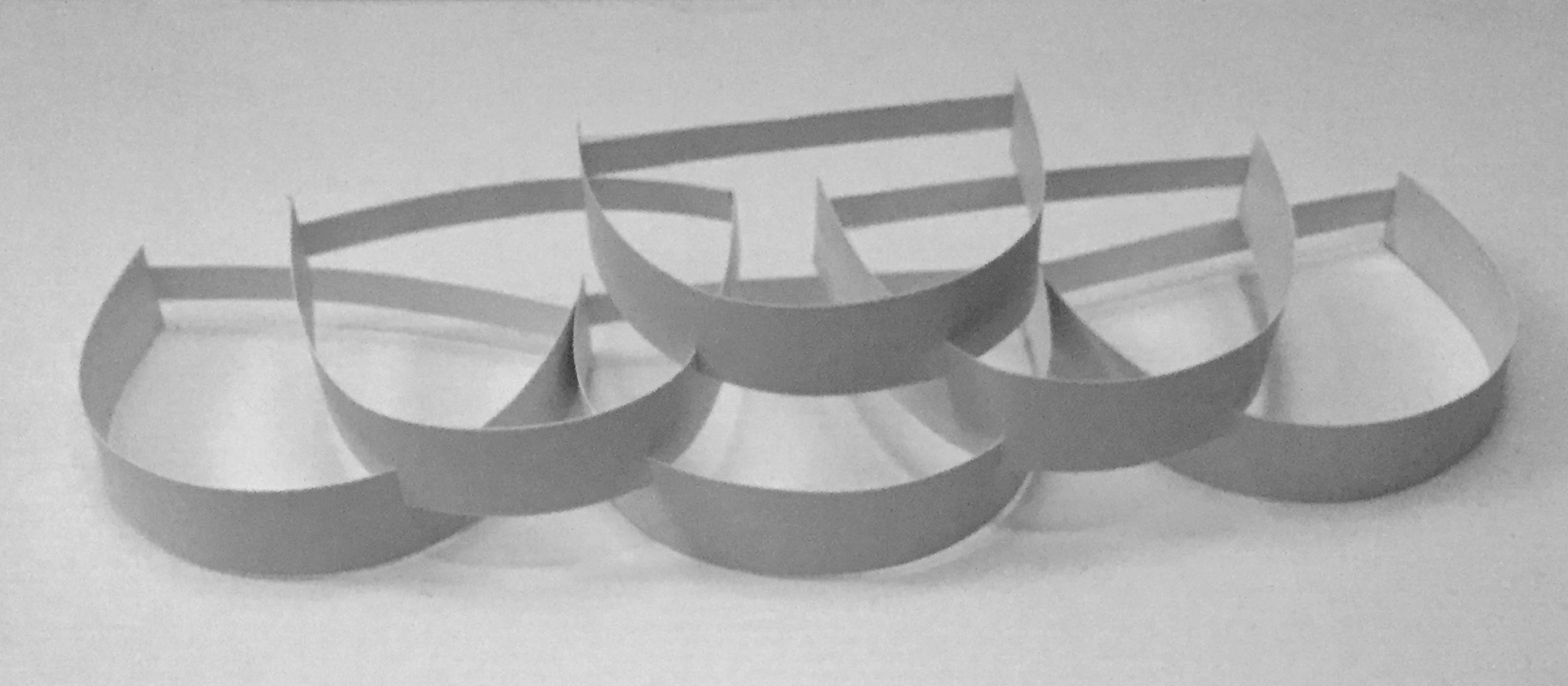
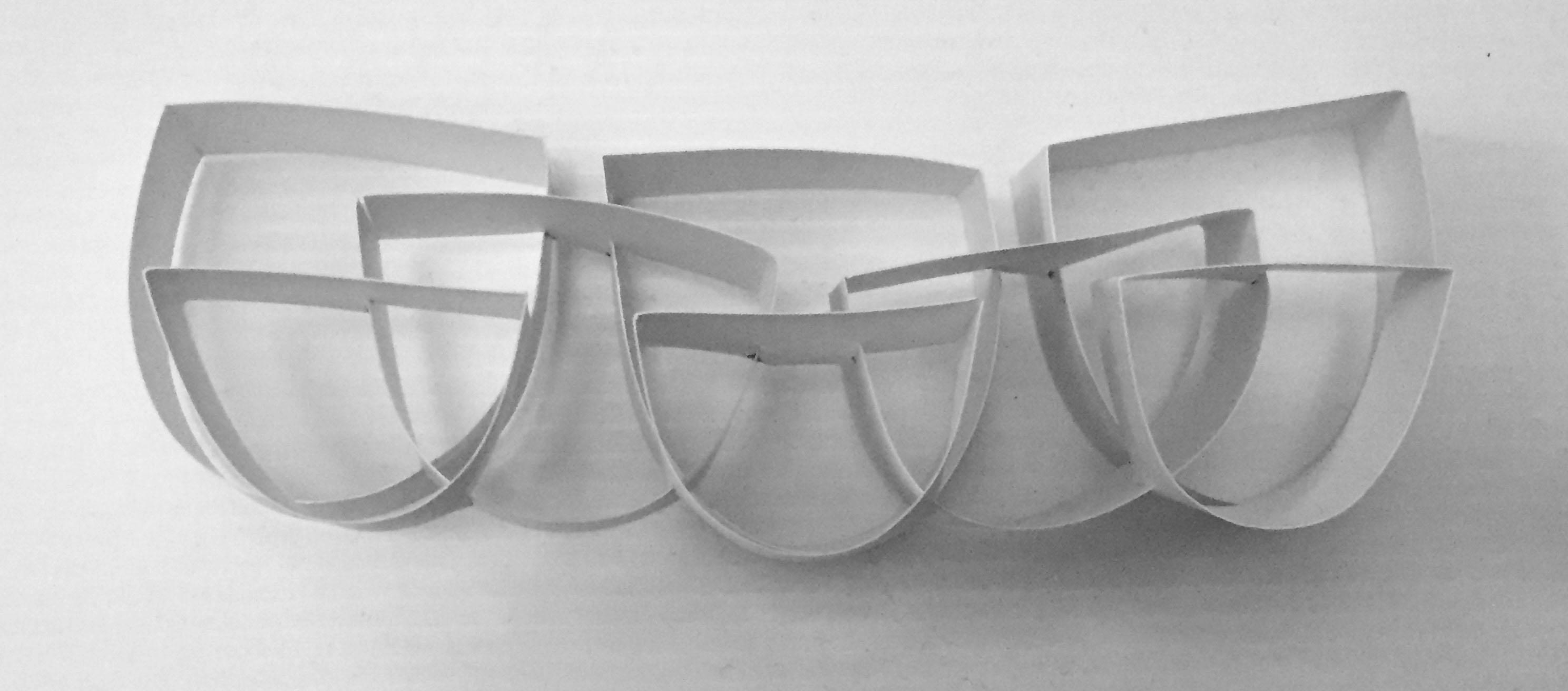
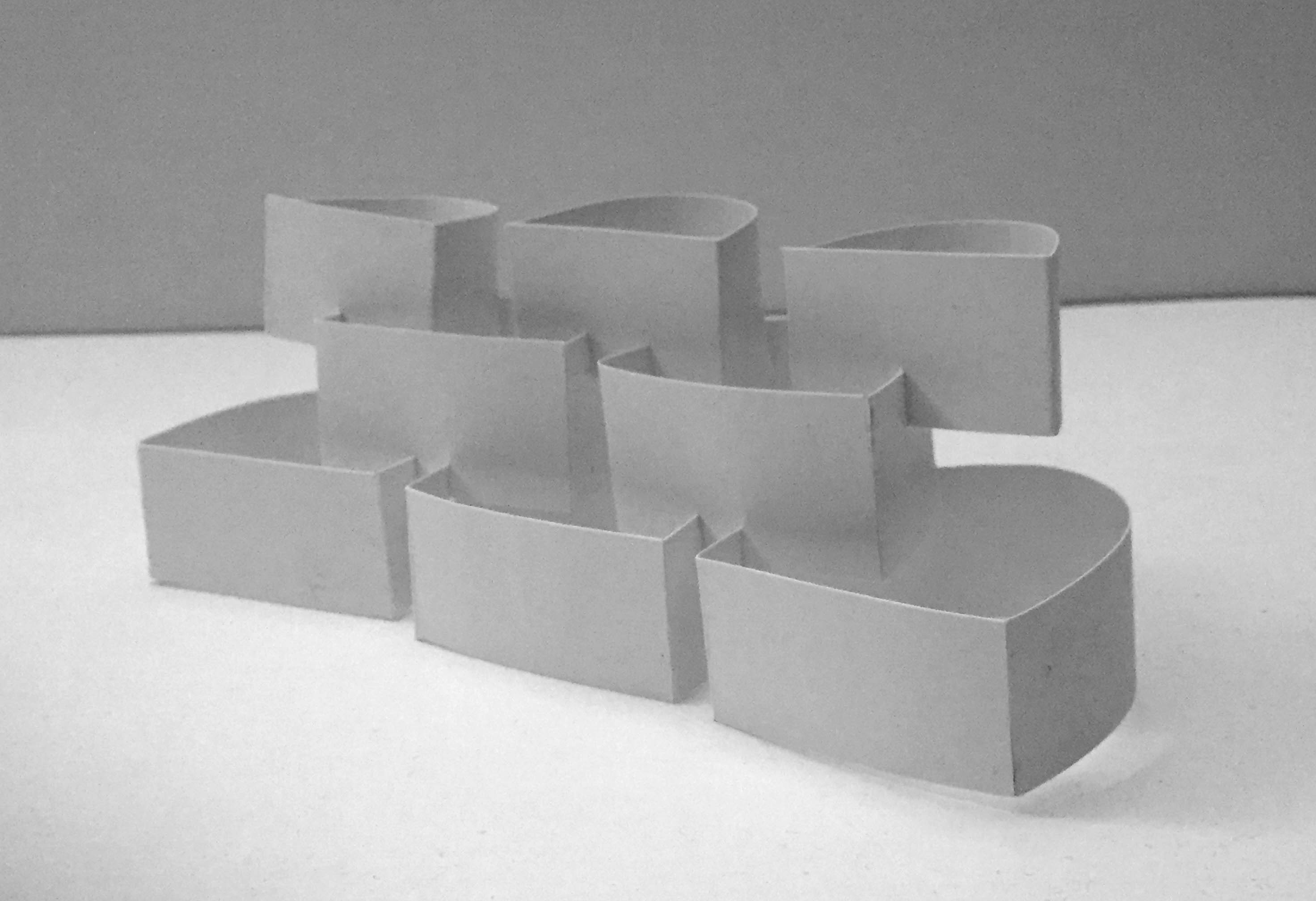
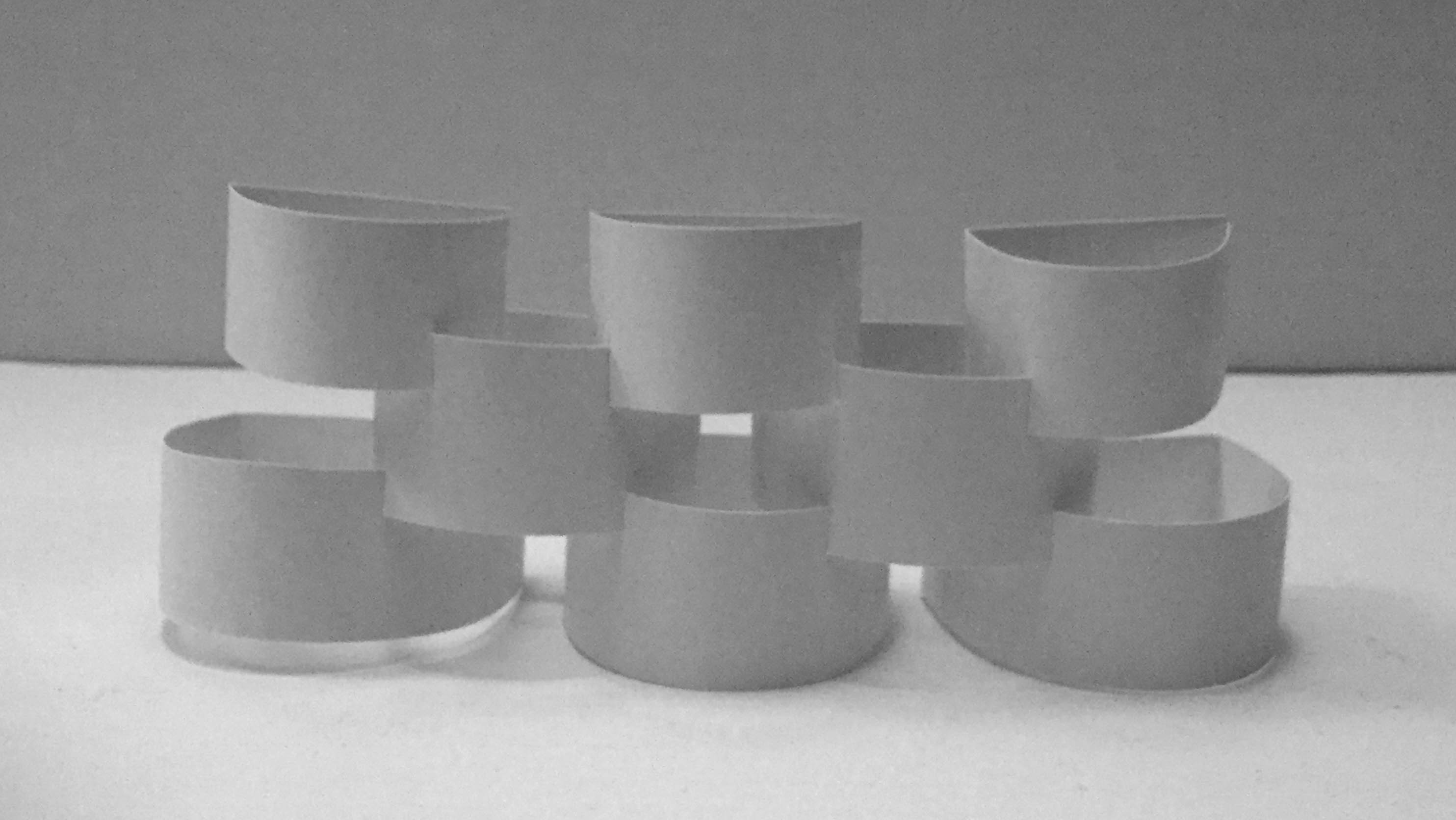
DESIGN EXPLORER:
PROJECT STATEMENT:
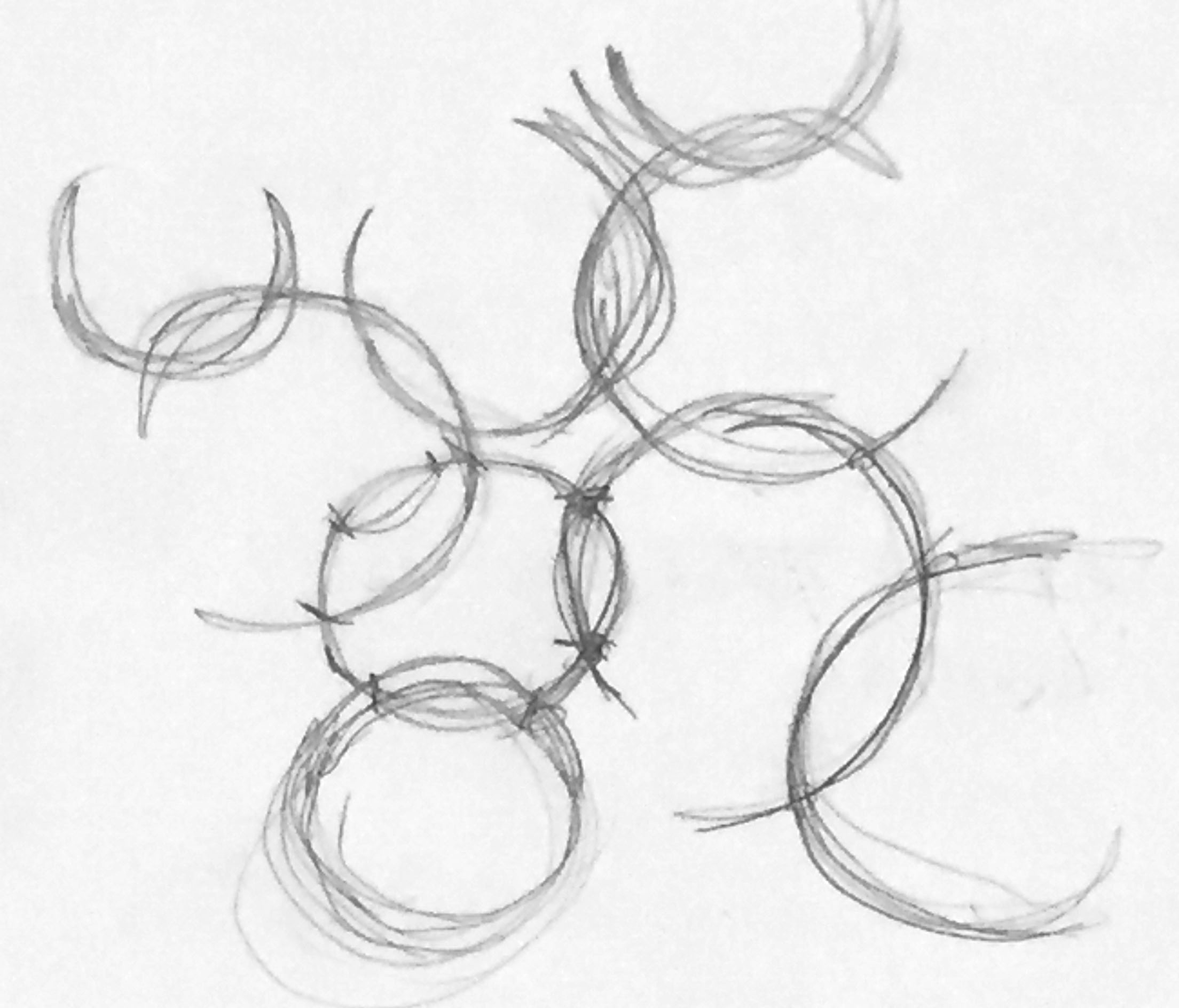
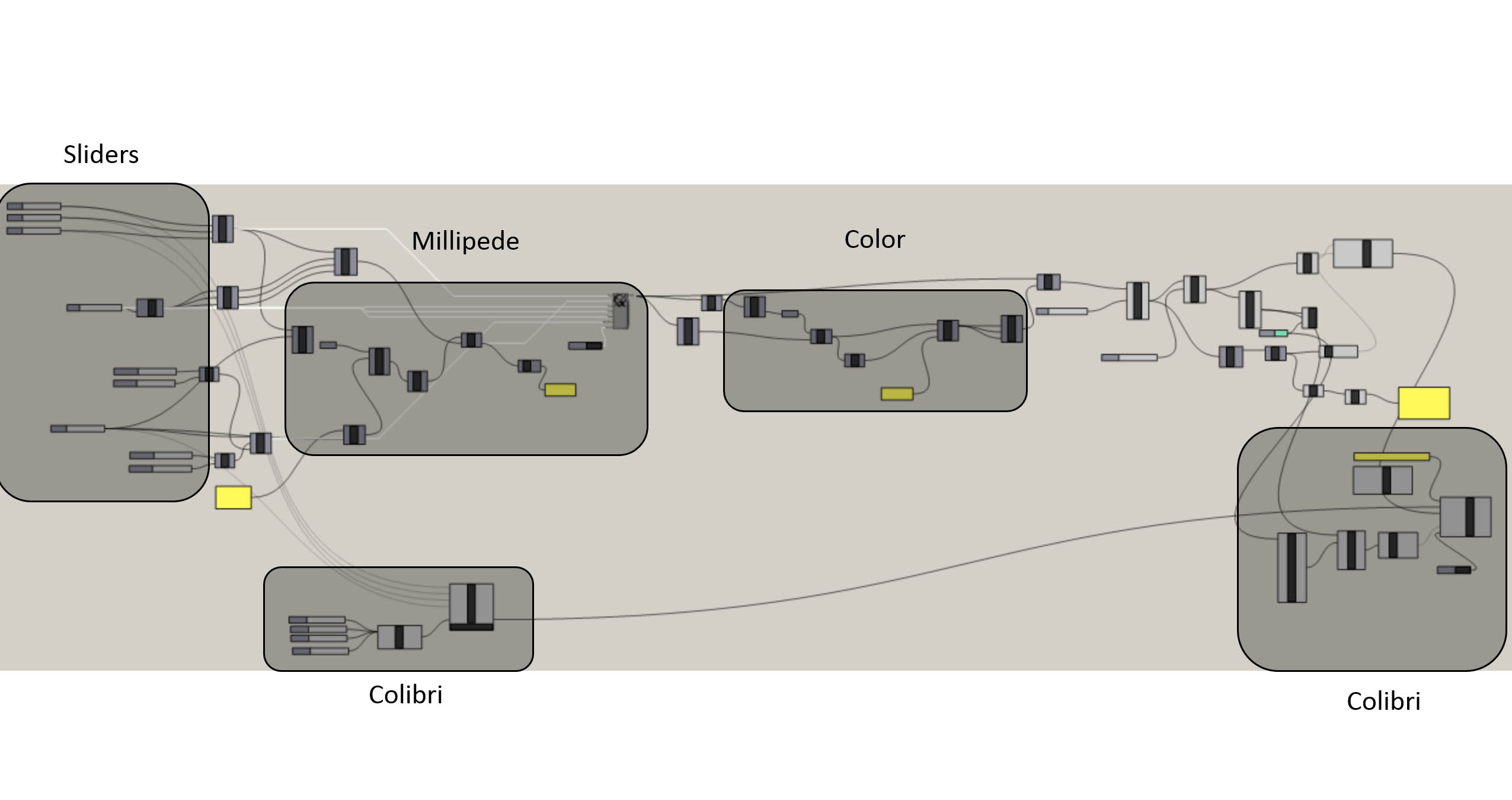
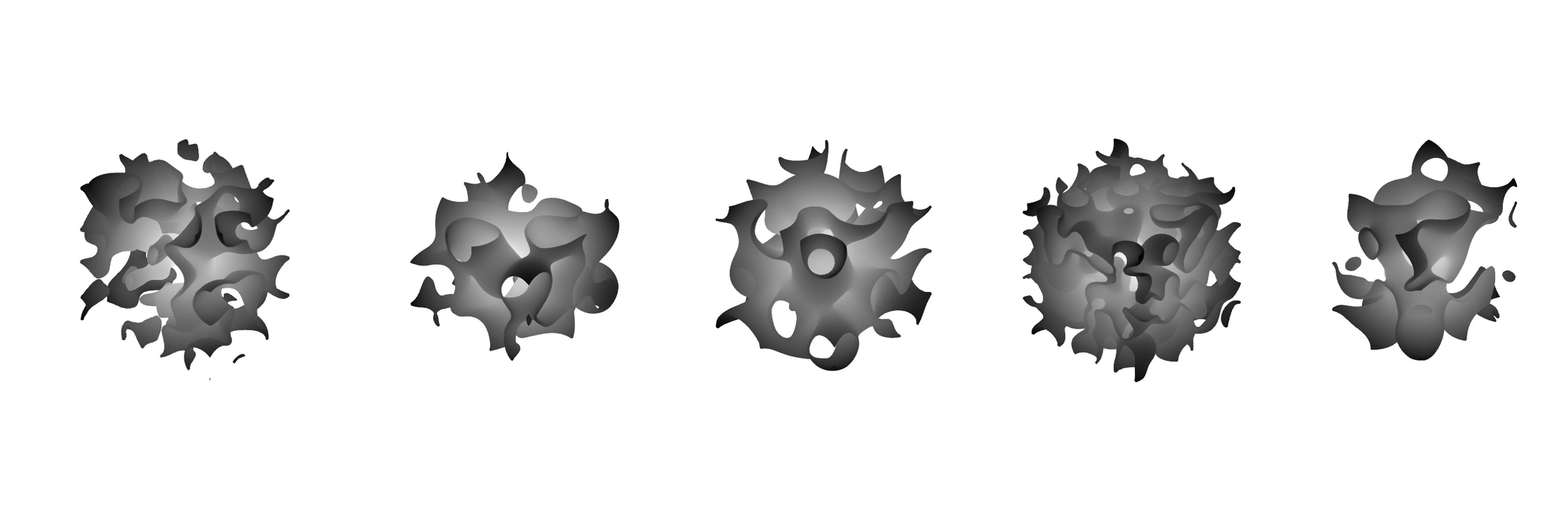
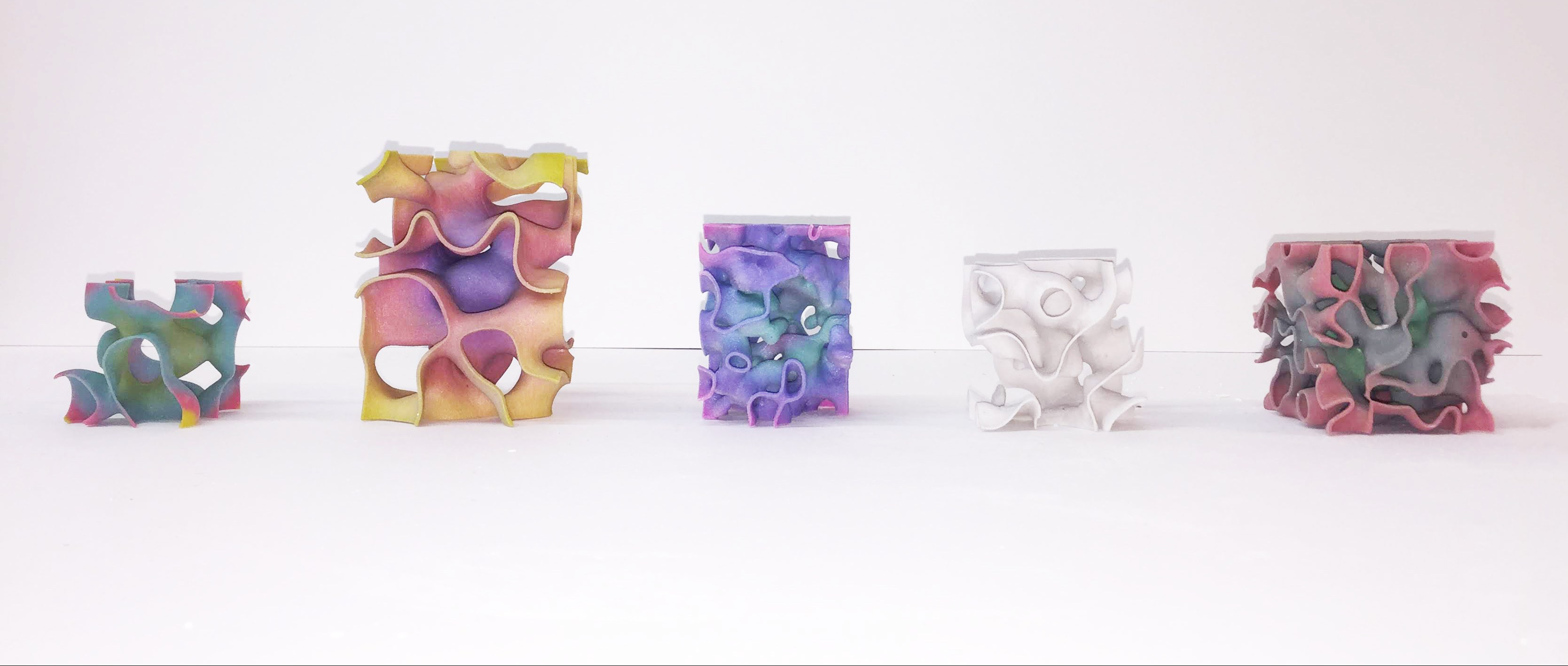
For this project I took inspiration in Coral Reefs, observing their organic shape and color I created 5 product families that will be use as stationary table objects. Looking at precedent and examples I found that this geometry is known as a gyroid, within a bounding box full of points, spheres are creating depending of the amount of points and the expansion of spheres, which creates an intersection and later the full geometry.
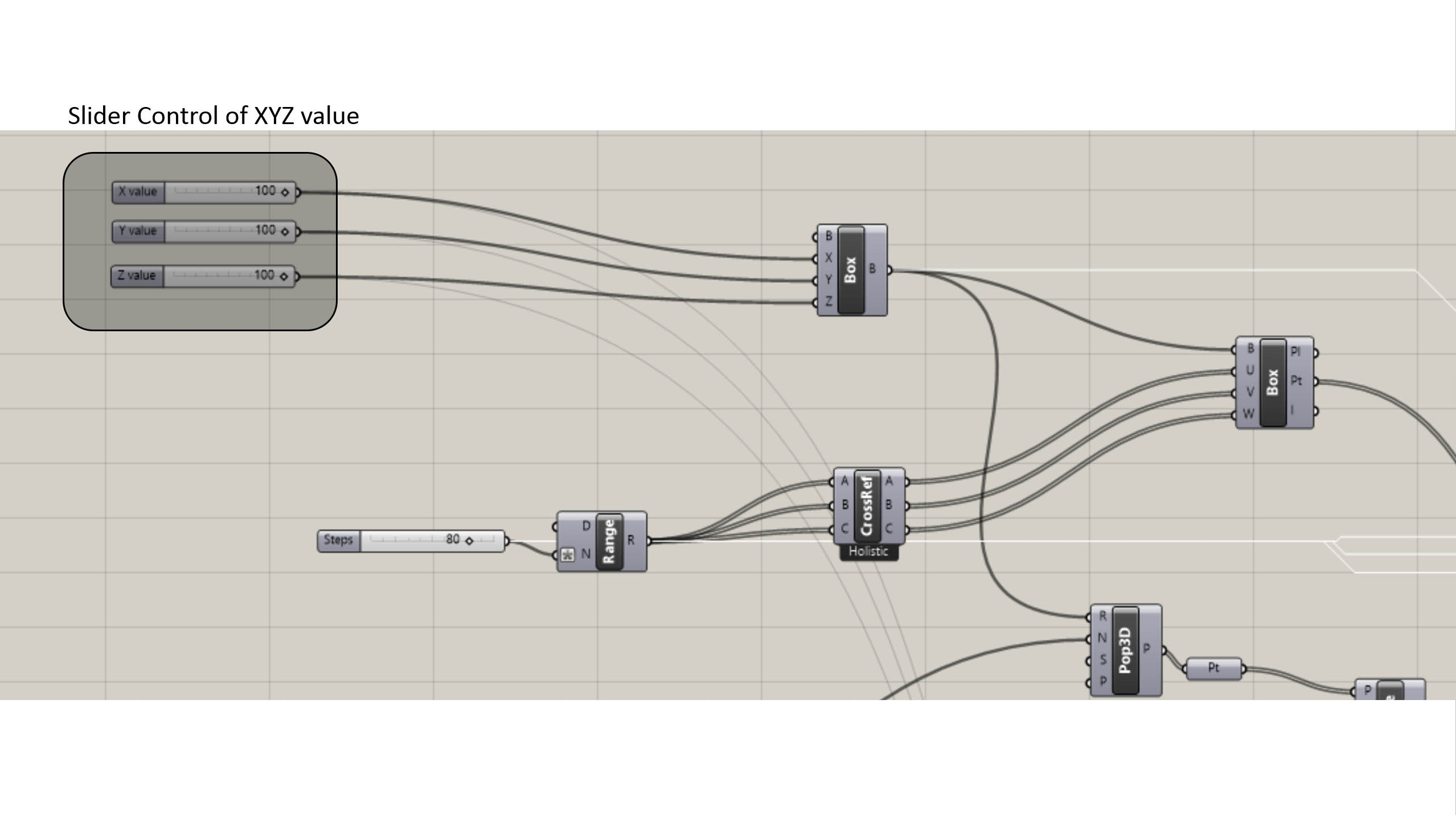
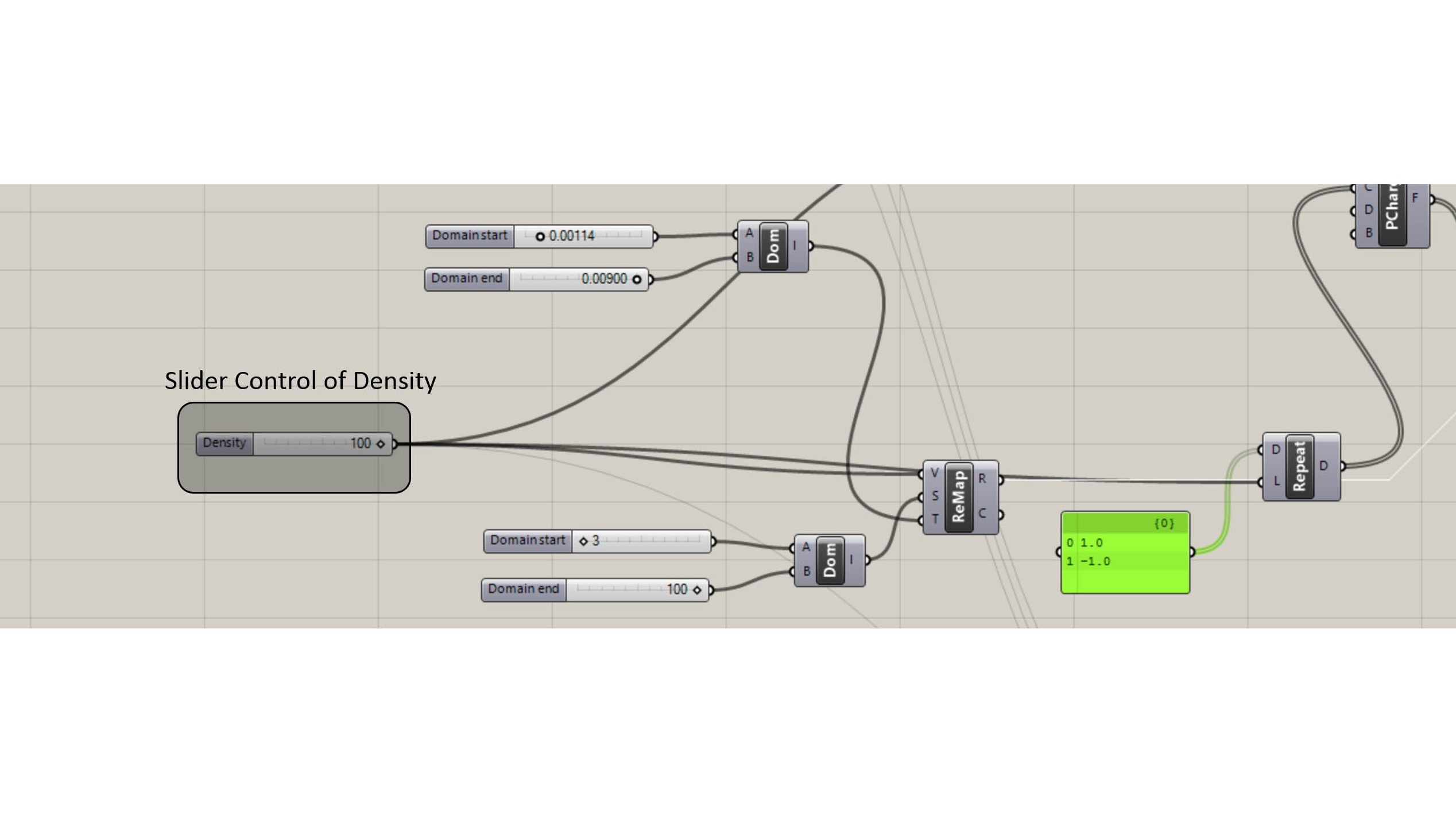
The various possibilities of the object are determined by 4 sliders: X value, Y value, Z value and density. The XYZ value showcase the different height or length of the parameter, the density shows is the number of points (spheres) that are within the bounding box. They depend on each other, if the slider value is changed the density slider has to change also.
PRECEDENT


DESIGN PARAMETER

 KEY PARAMETER:
X VALUE


Y VALUE


Z VALUE


DENSITY


FAMILY MATRIX
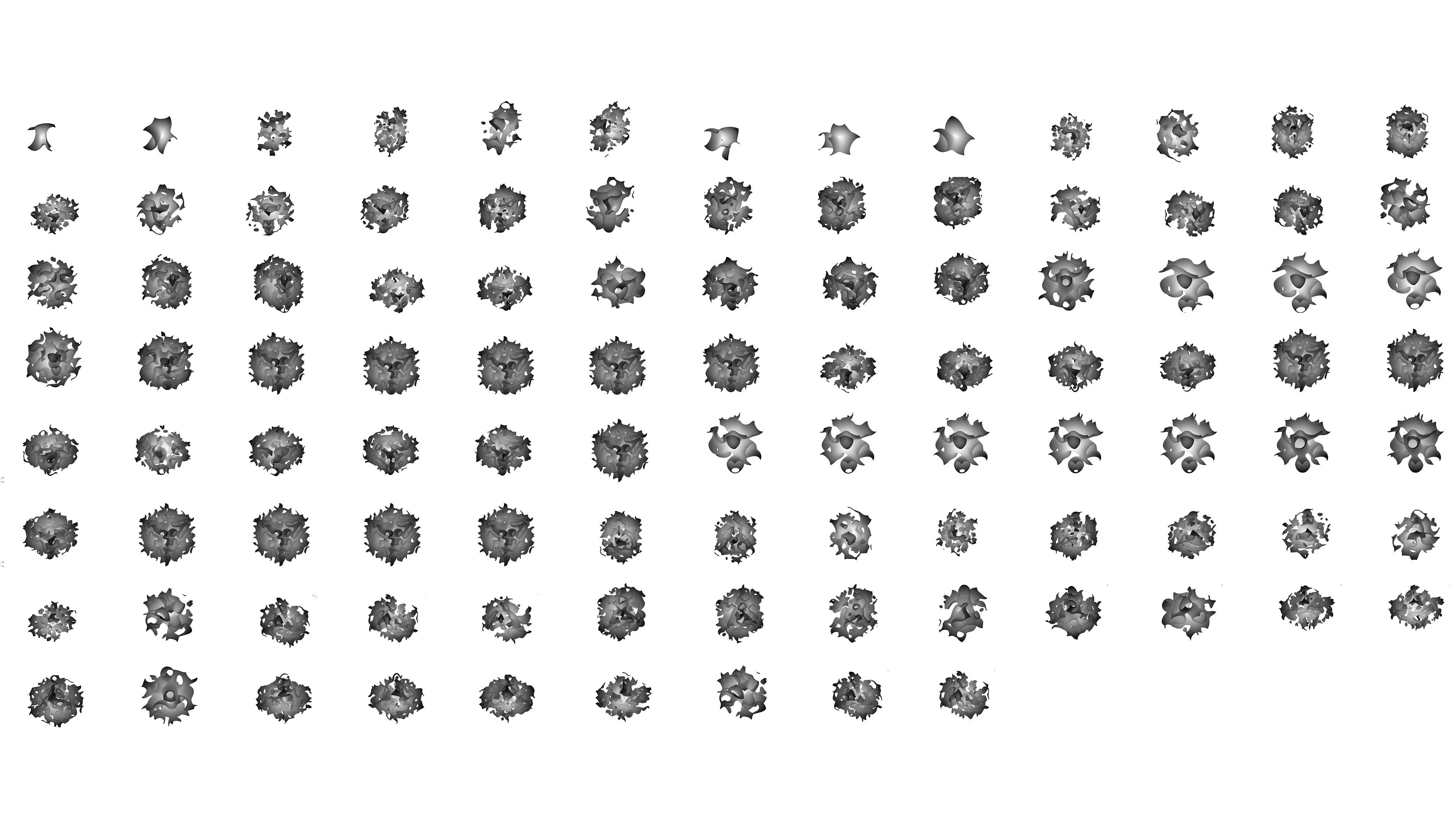
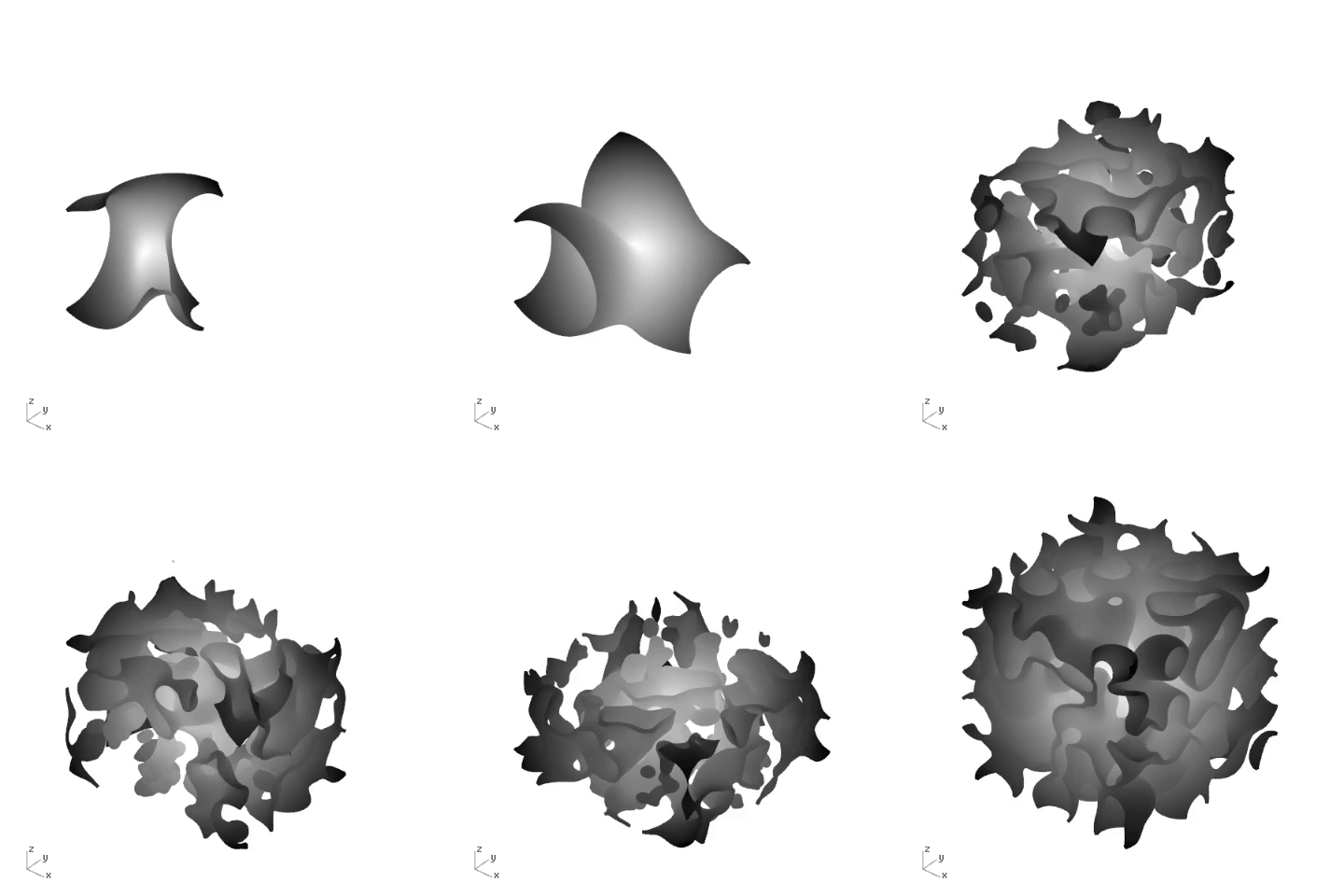
5 PRODUCT FAMILIES
3D PRINTED MODELS


Presentation: FamilyProductPresentation_ElizabethGomez
Design Explorer: http://tt-acm.github.io/DesignExplorer/?ID=1Xheo3
PROJECT STATEMENT:
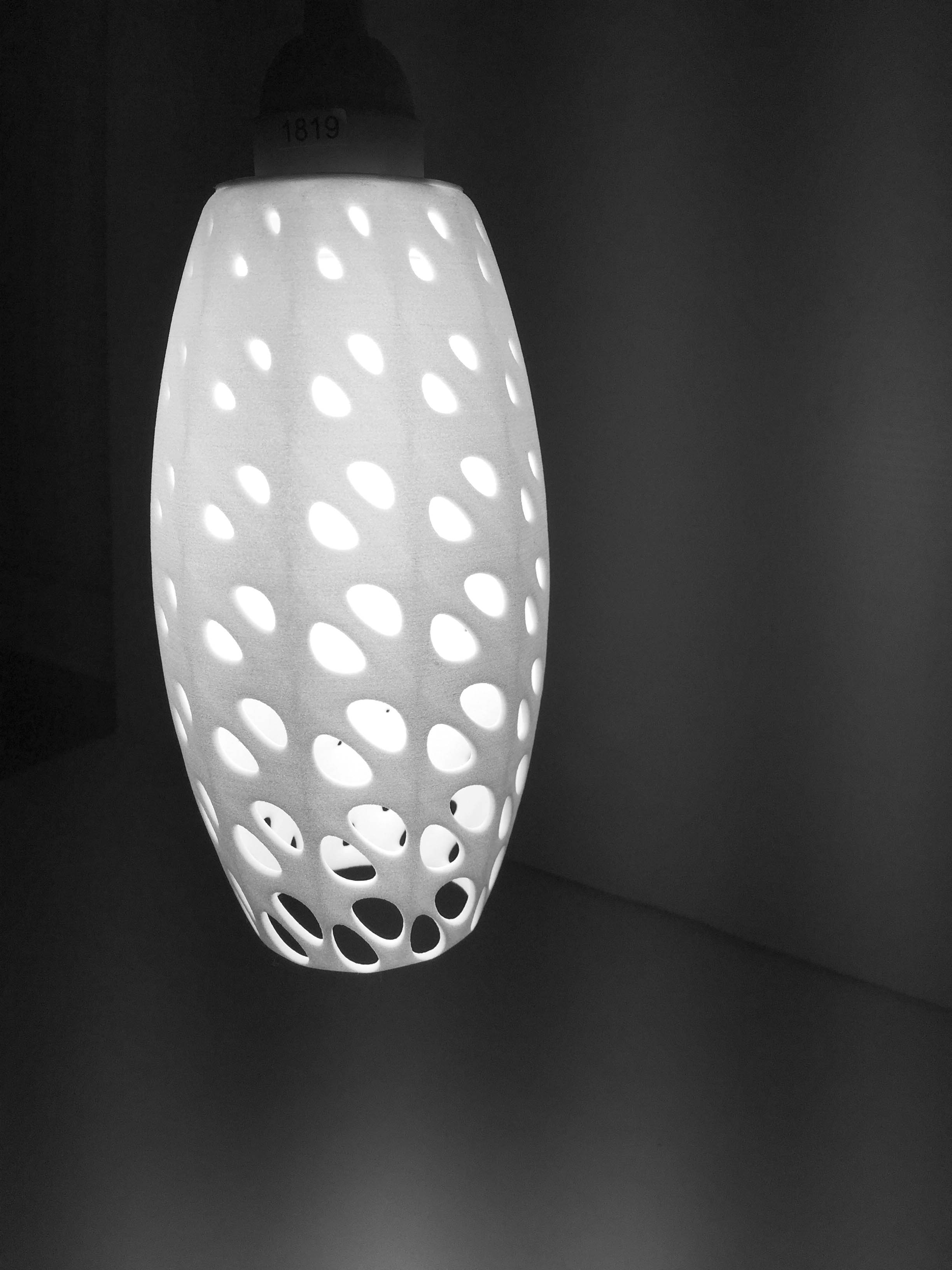
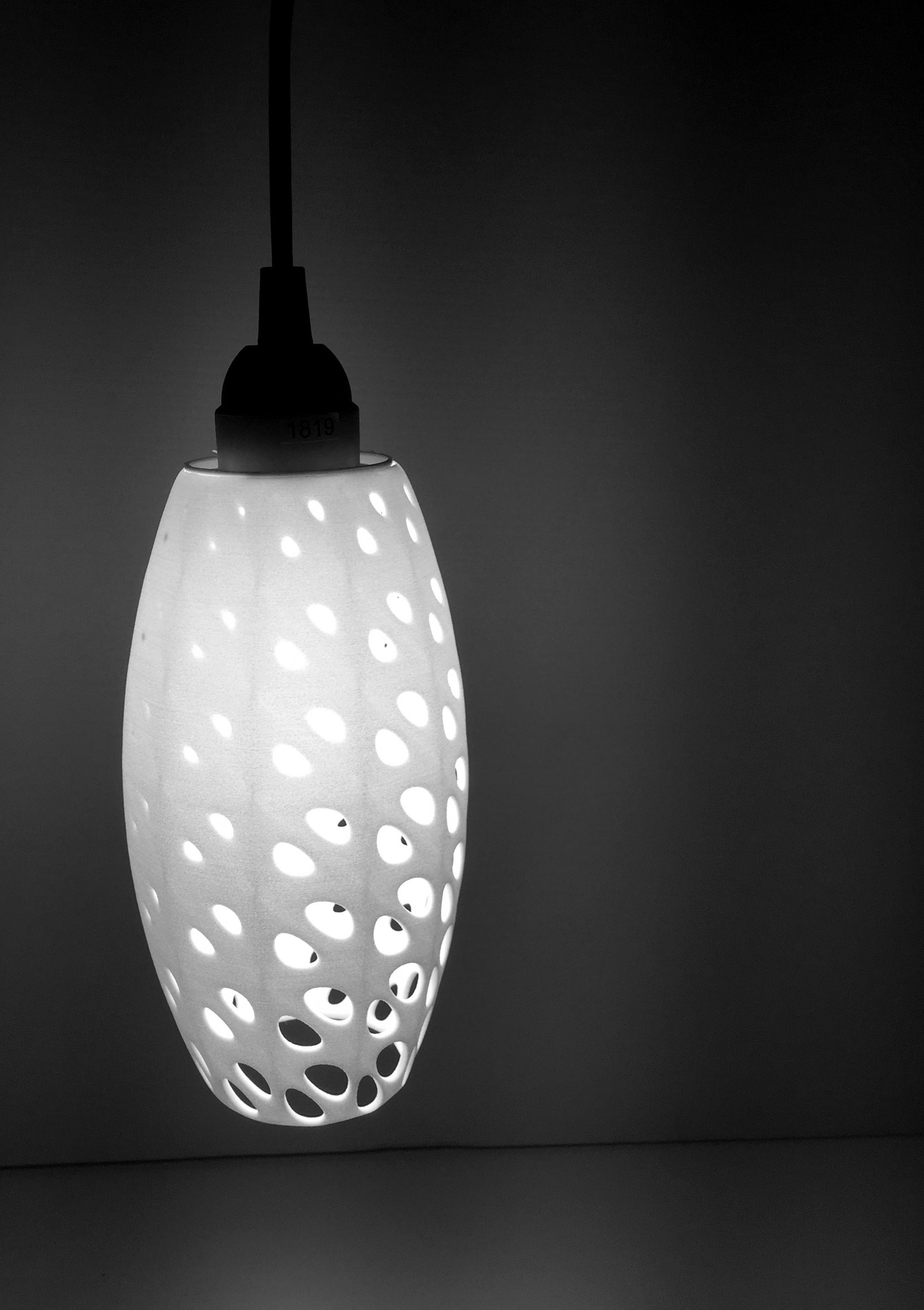
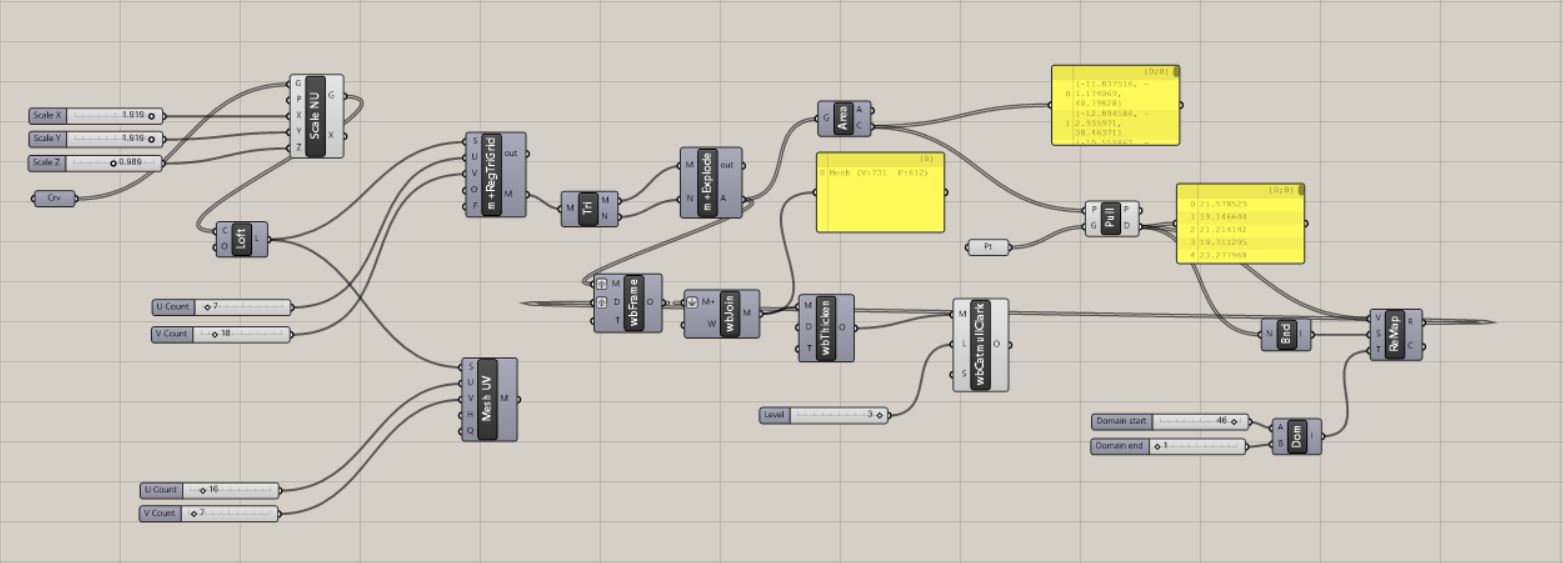
My project has to do with the directional diffusion of light. I’ve seen directional light and diffused light fixtures as separate entities in the past, so I thought that it might be interesting to combine the two concepts. I have designed pendant lamp shades as well as candle light diffusers.
There were three main parameters that I worked with: height, width, and size of the holes based on the variance in width of the triangular quads. This allowed for a lot of interesting variation. Another big component was the attractor point used. This is what caused the holes to be larger in some areas and smaller in others, in order to diffuse/direct the light.
FINAL MODELS:


SKETCHES:
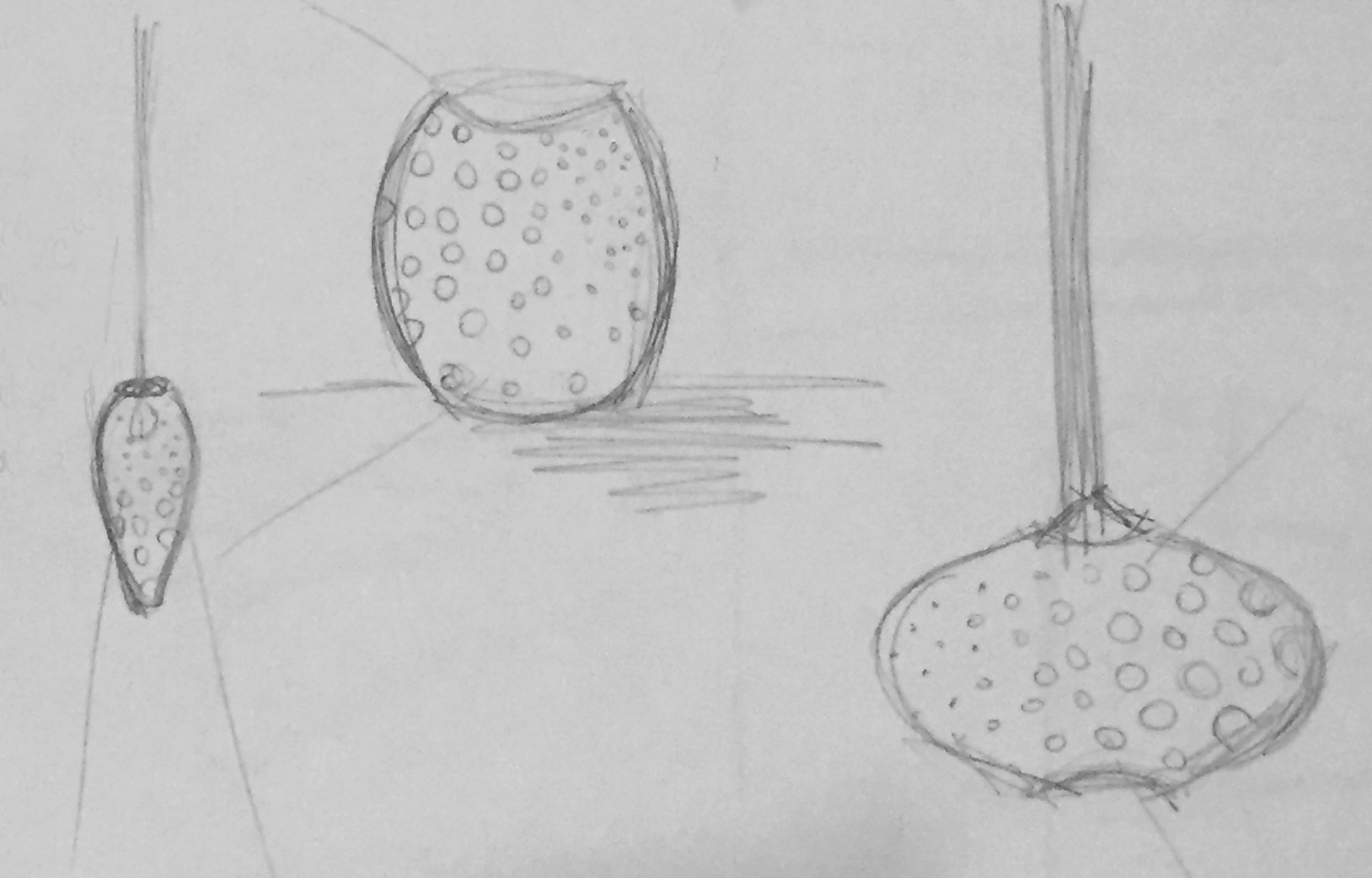
Creating directional gradient of light through gradient in perforation.
5 SELECTED PRODUCTS:
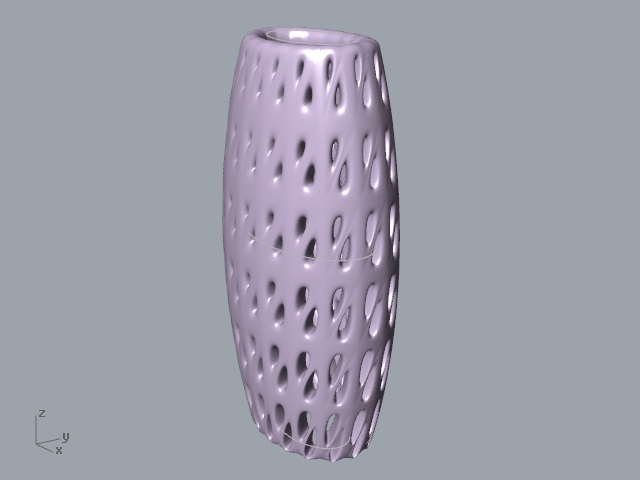


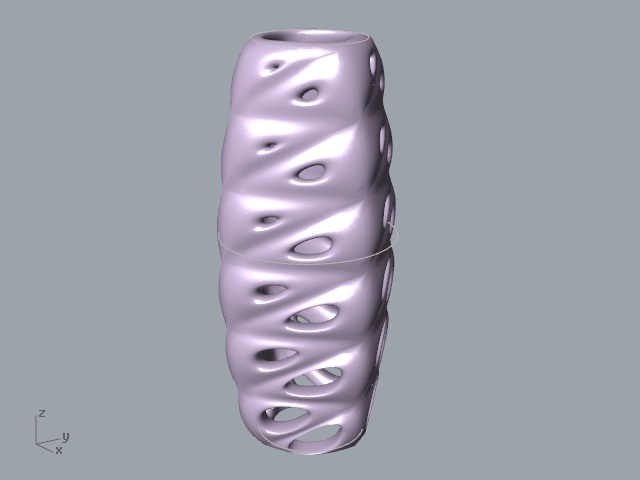

KEY PARAMETER: Y VALUE (WIDTH)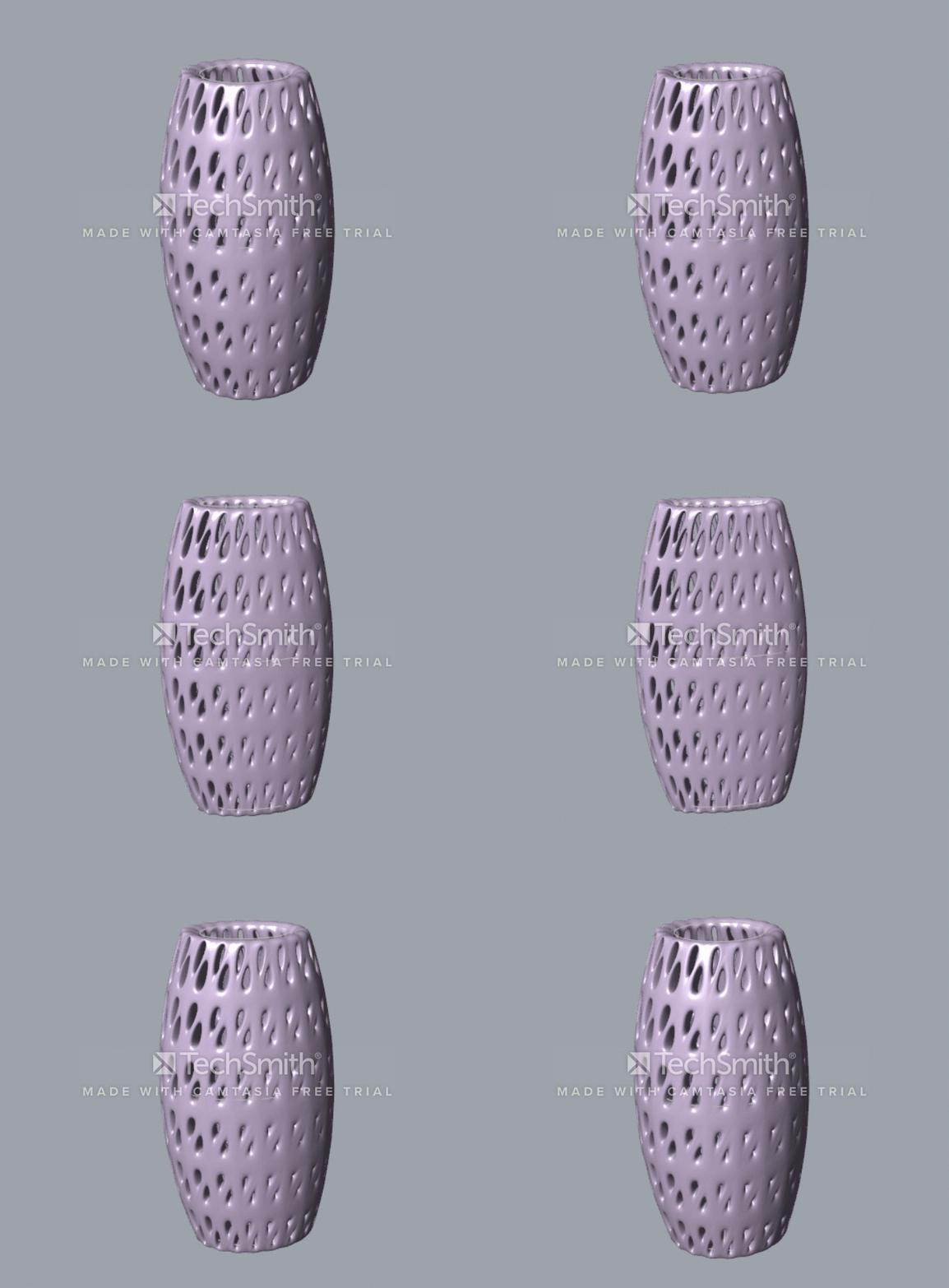
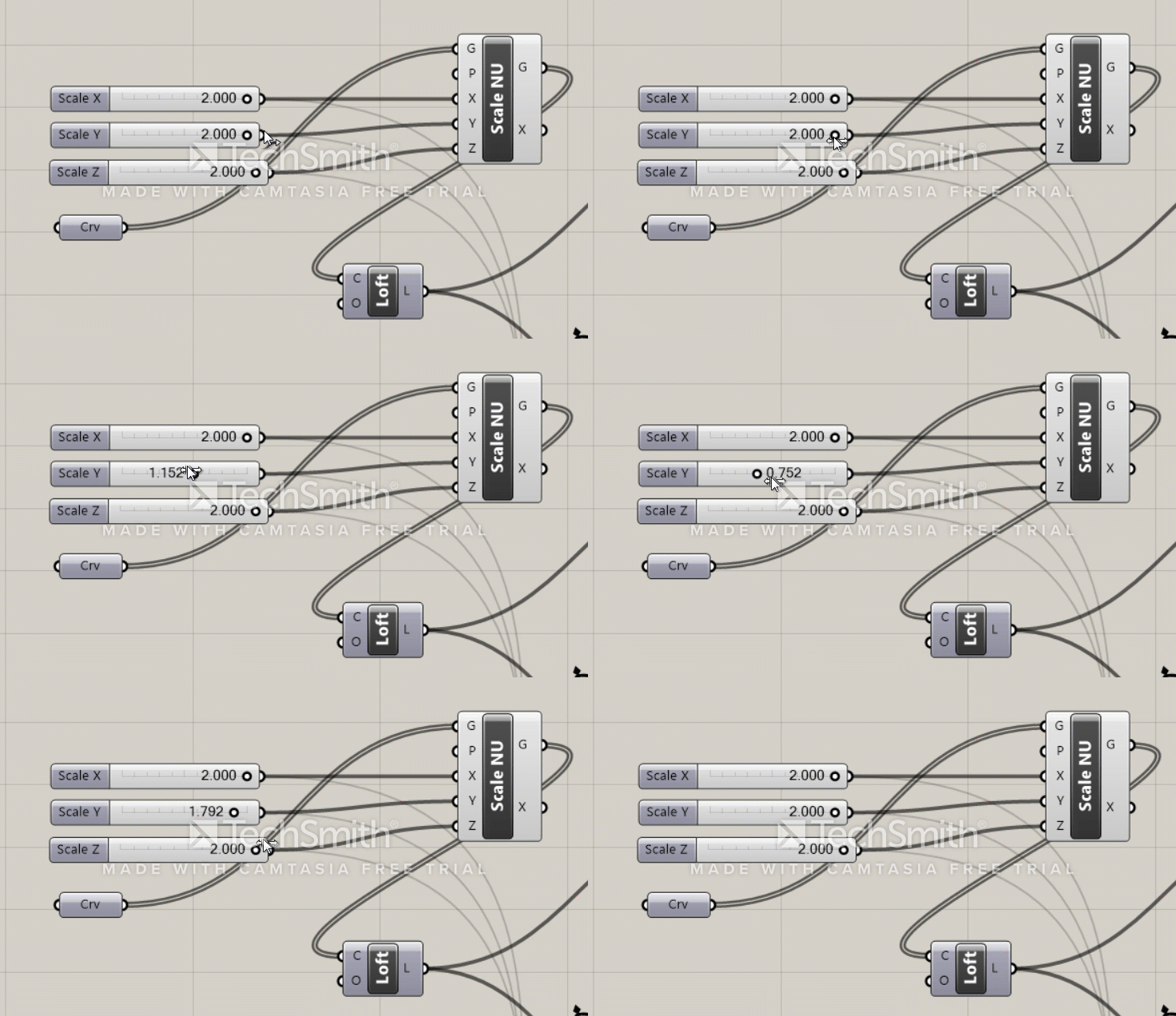
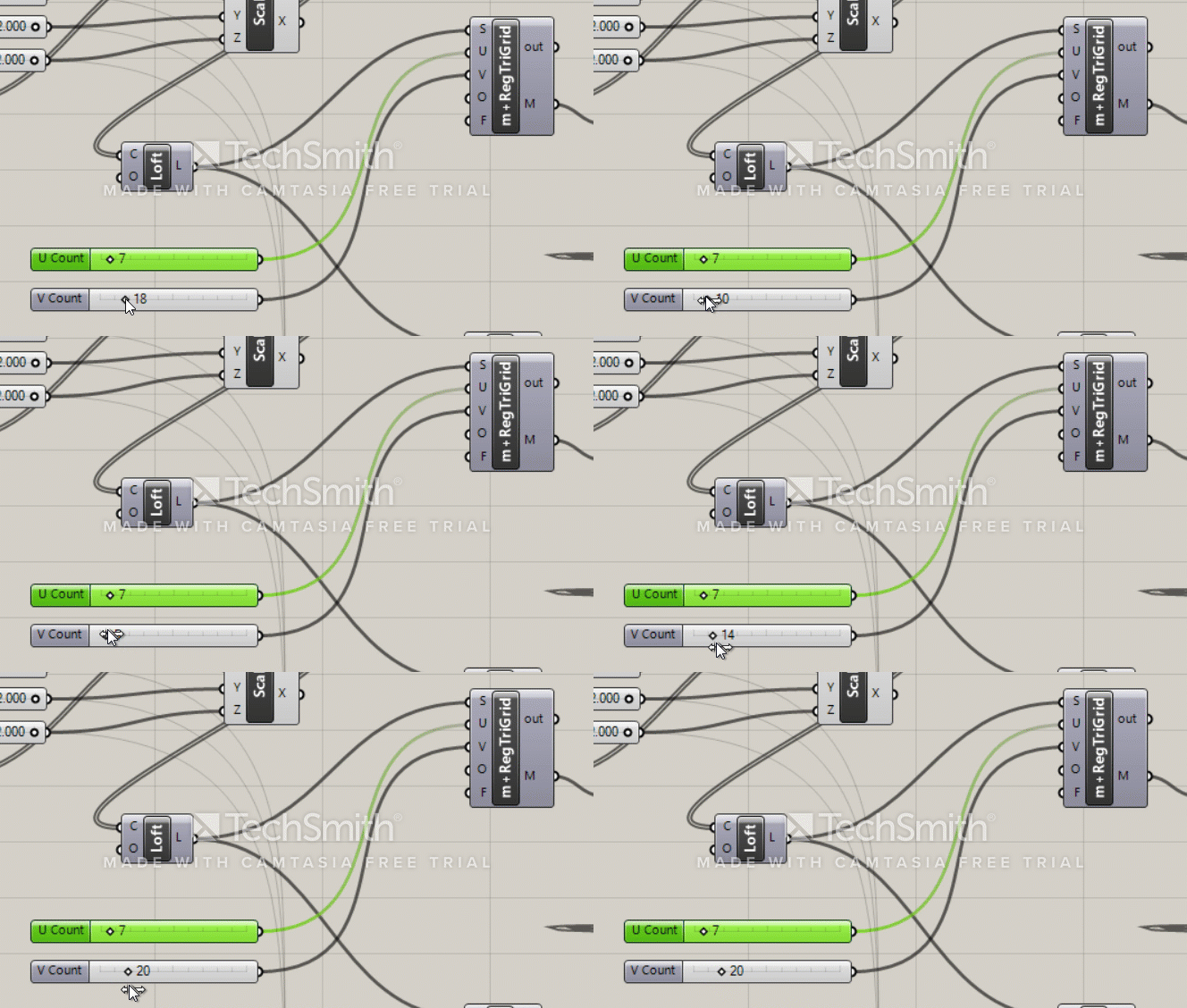
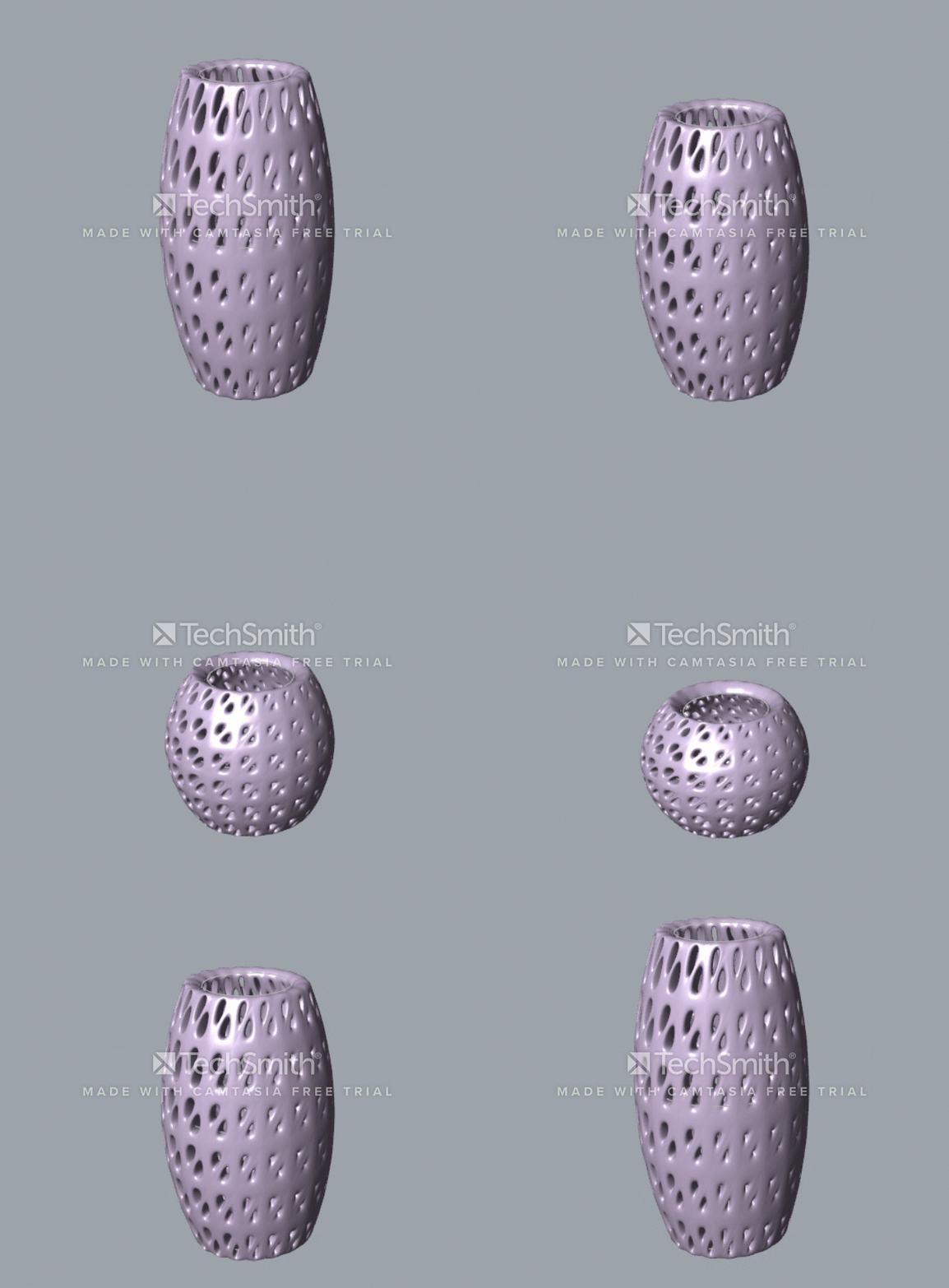
KEY PARAMETER: V COUNT OF TRIANGULAR GRID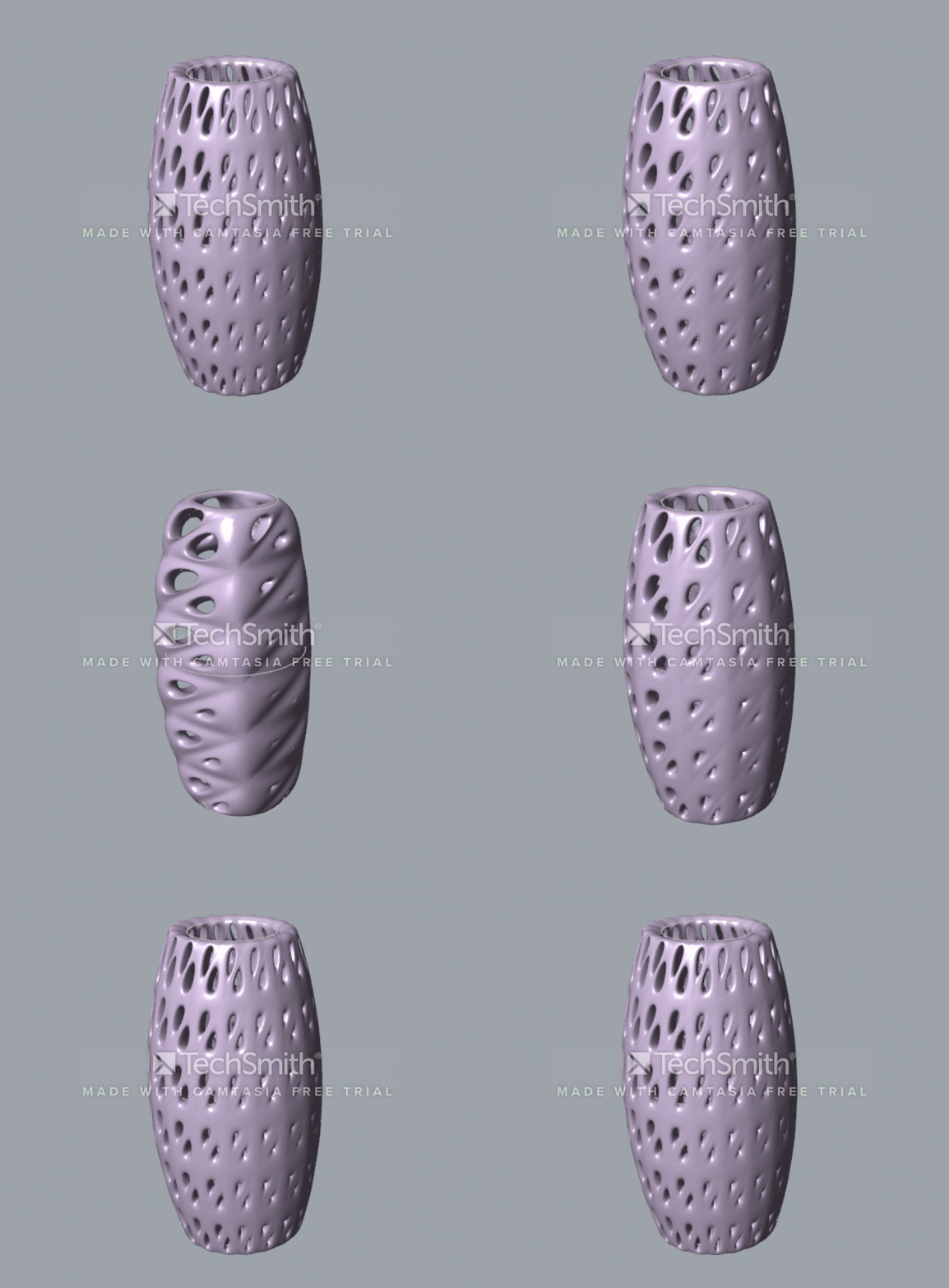
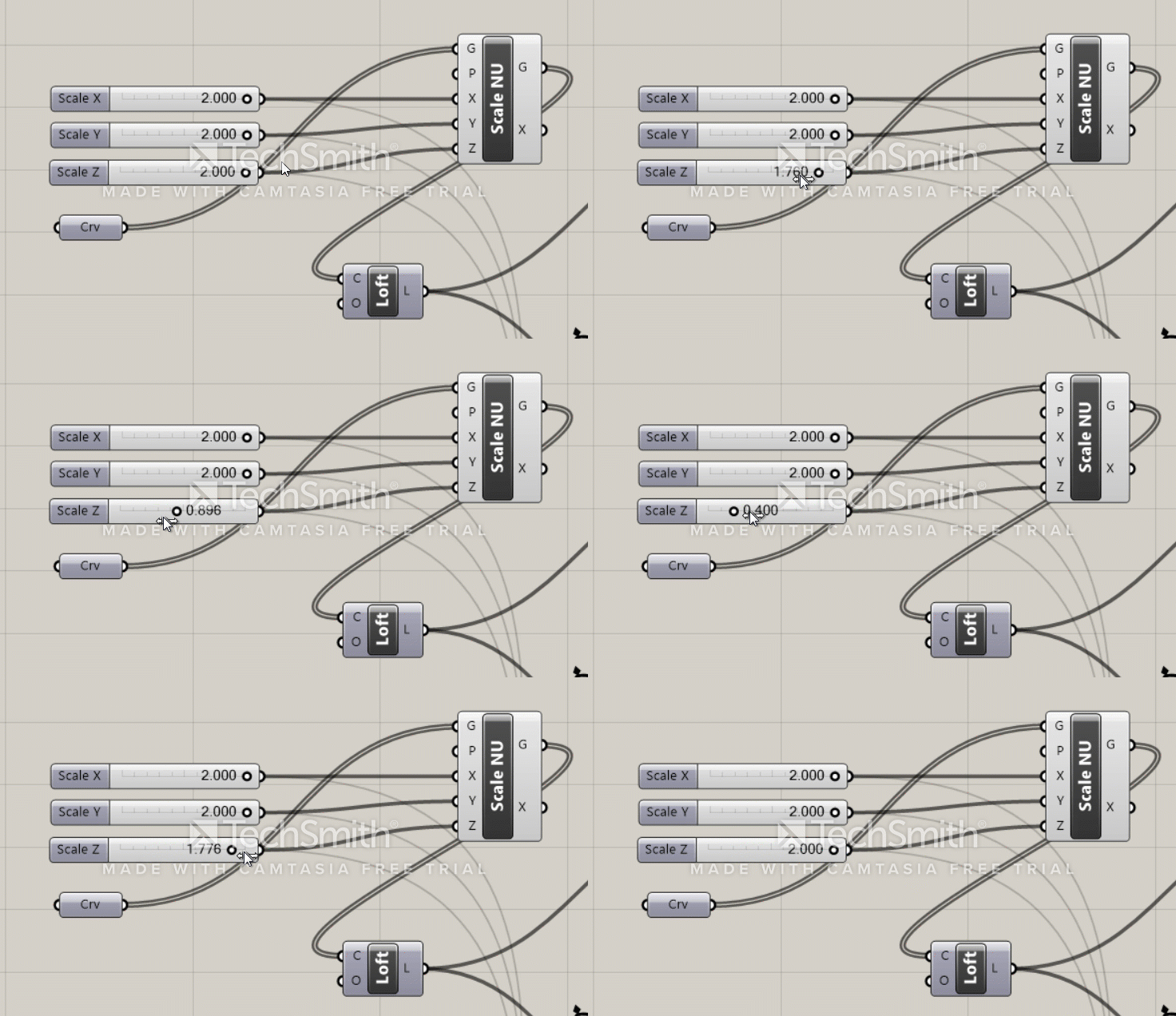
KEY PARAMETER: Z VALUE (HEIGHT)
KEY PARAMETER: ATTRACTOR POINT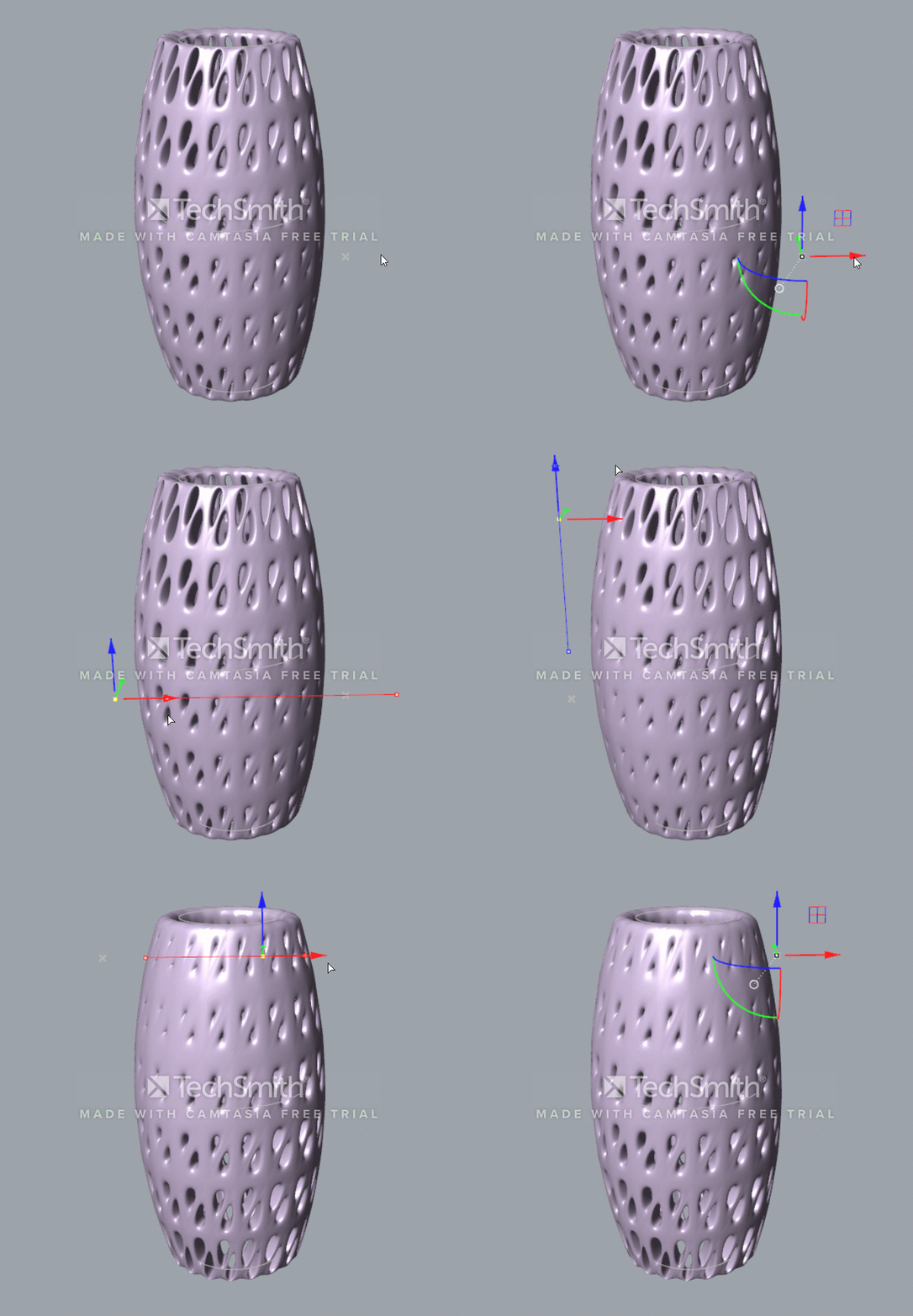

Design Explorer : https://tt-acm.github.io/DesignExplorer/?ID=X7iAEp
 Parametrics
You must be logged in to post a comment.