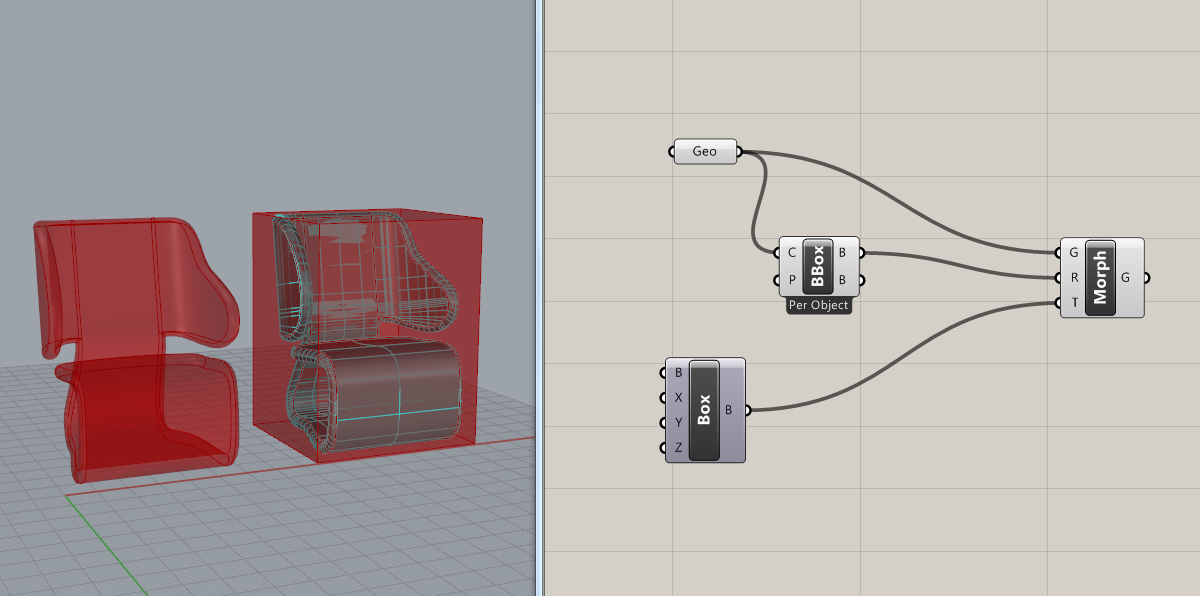
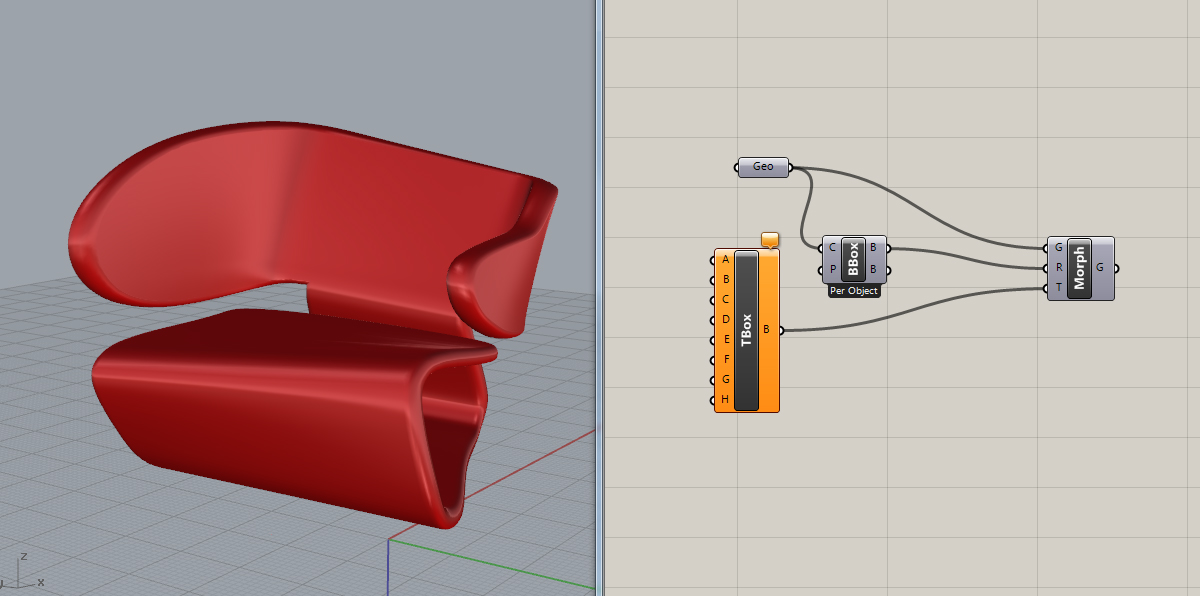
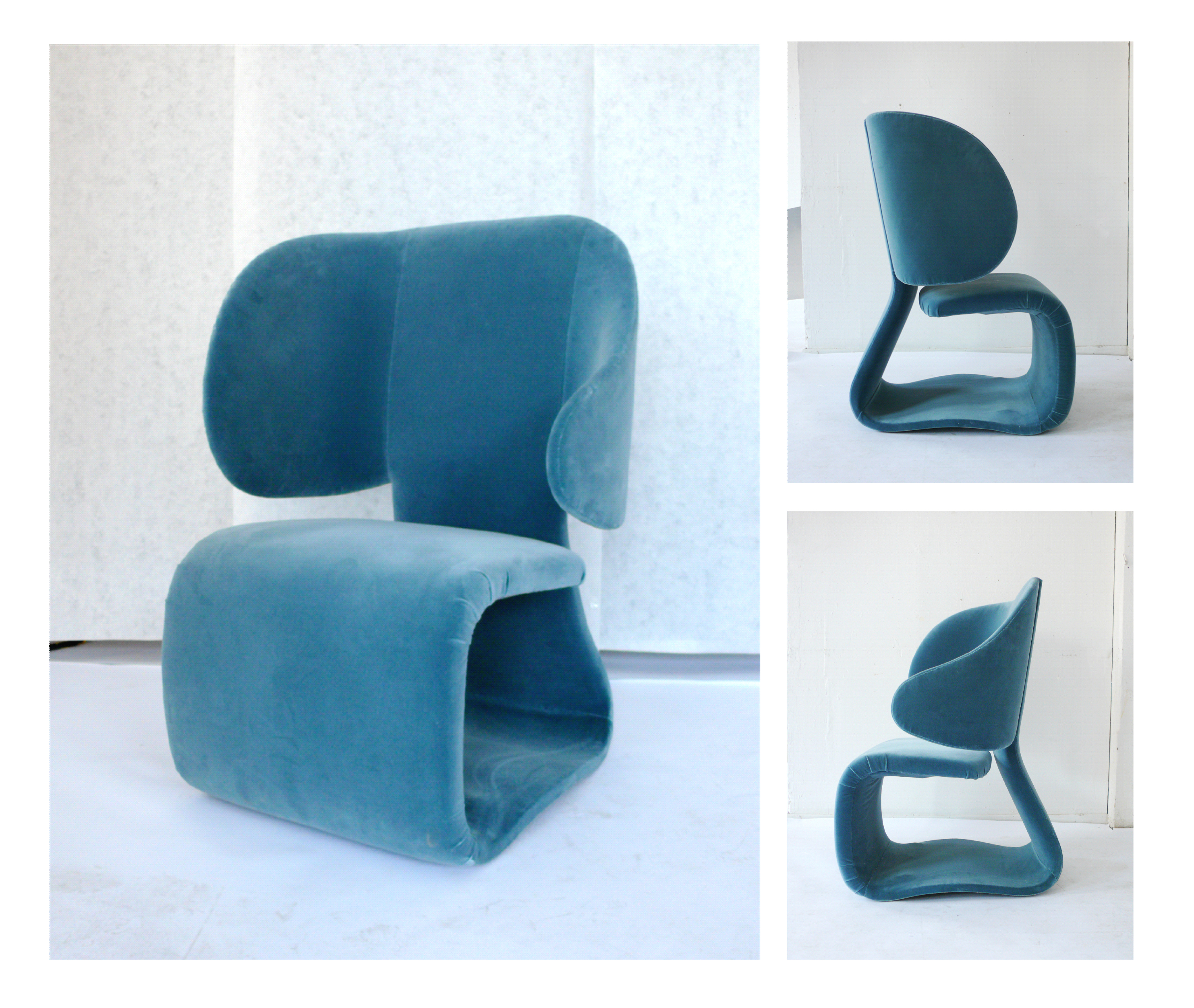
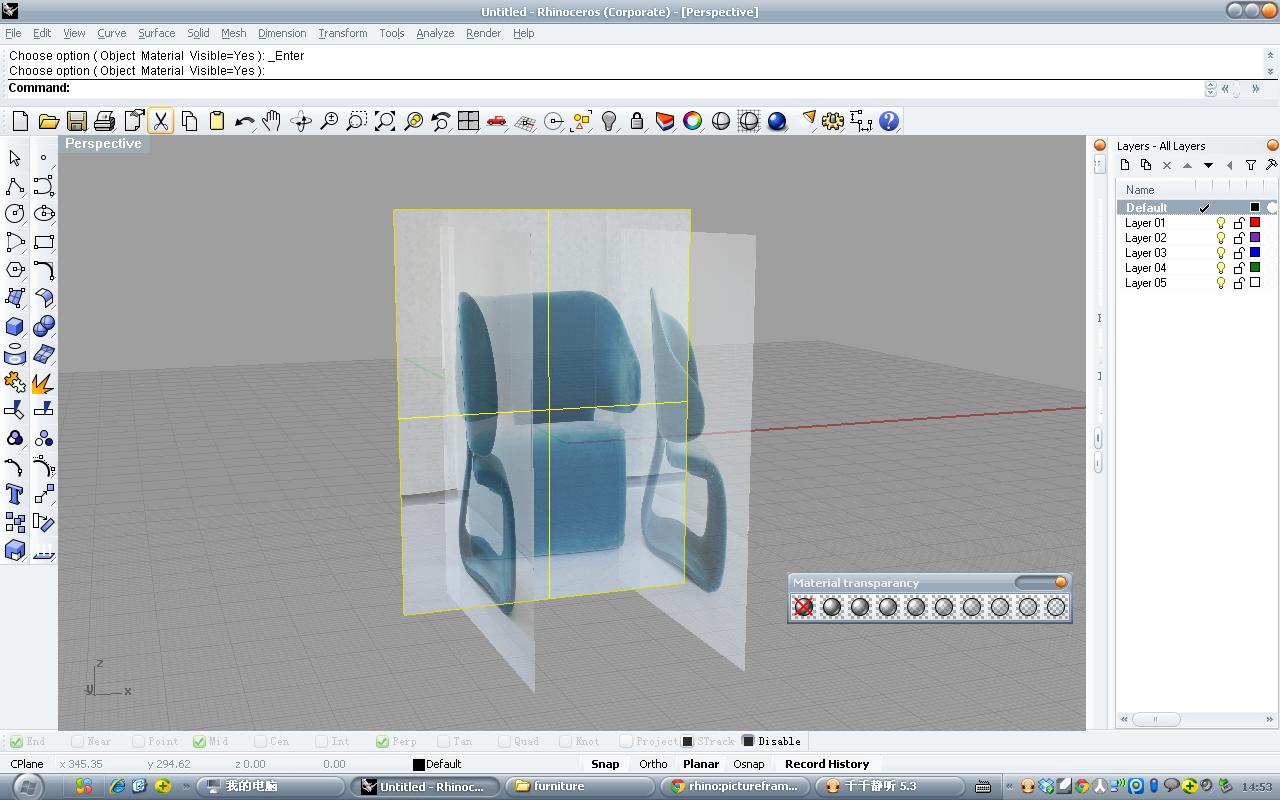
Seating assignment – grasshopper modelling

7

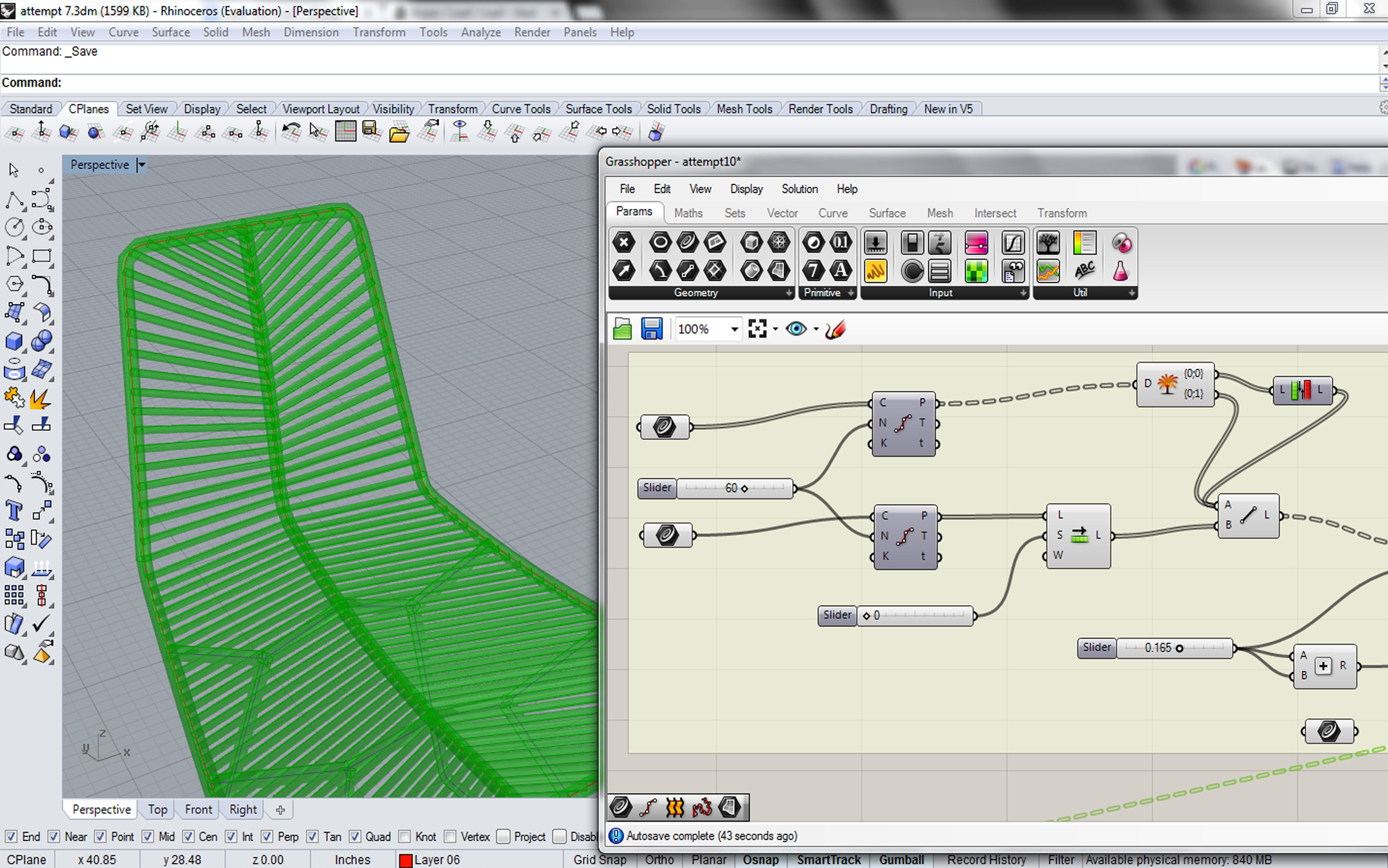
The curves were lofted to form a polysurface. When lofted in Rhino it generated several open polysurfaces instead of one single surface.

6

A single surface was generated by lofting the surfaces in grasshopper. Then iso-curve and pipe components were used to generate this iteration.8

However it didnt work too well. Back to a framework of two 3 curves and definitions using line segment and pipe components.

The number of spokes or ribs, their thickness, number and orientation are varied using sliders. The height and width of the seating is varied along the z axis.


coconut chair- progress

Coconut Chair progress

grasshopper_2_9

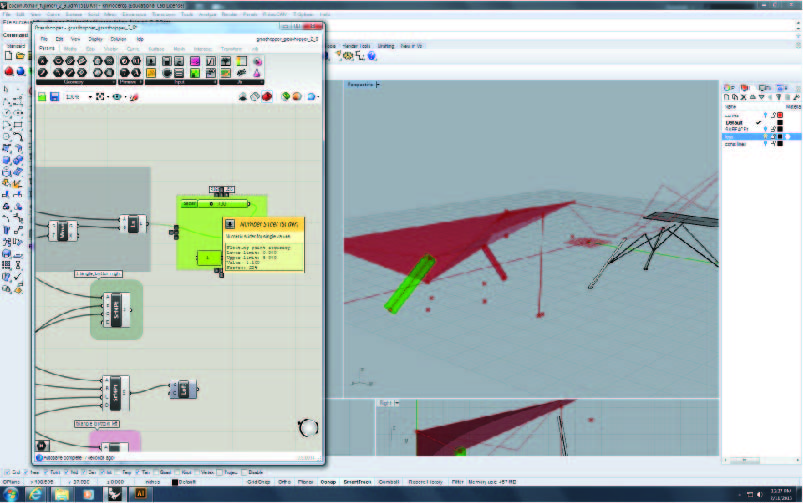
Progress on the coconut chair– can’t tell if it’s a progress really, but everything is newly referenced to the points via Grasshopper. Due to its surprising complexity on the chair, I had to create new triangular surfaces, referenced that, and now I am trying to figure out the surface to move along with the commands created…wish me luck.


Arper Leaf Chair

Seating Assignment 1Leaf_chair_1-650x455

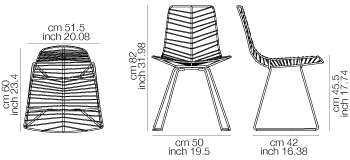
The Arper leaf Chair is designed by  Lievore Altherr Molina. It was inspired by  the structure of a leaf and is the design interpretation of nature with a simple yet comfortable seat made from steel.

leafdims

This is the base for my first assignment. The parameters that I intend to work with are

  •  the thickness of the ribs and frame
  •  the number of ribs or spokes
  •  the height/dimensions of the seat

Coconut Chair Progress

Screen Shot 2013-02-07 at 9.56.57 AM

Screen Shot 2013-02-07 at 9.56.41 AM

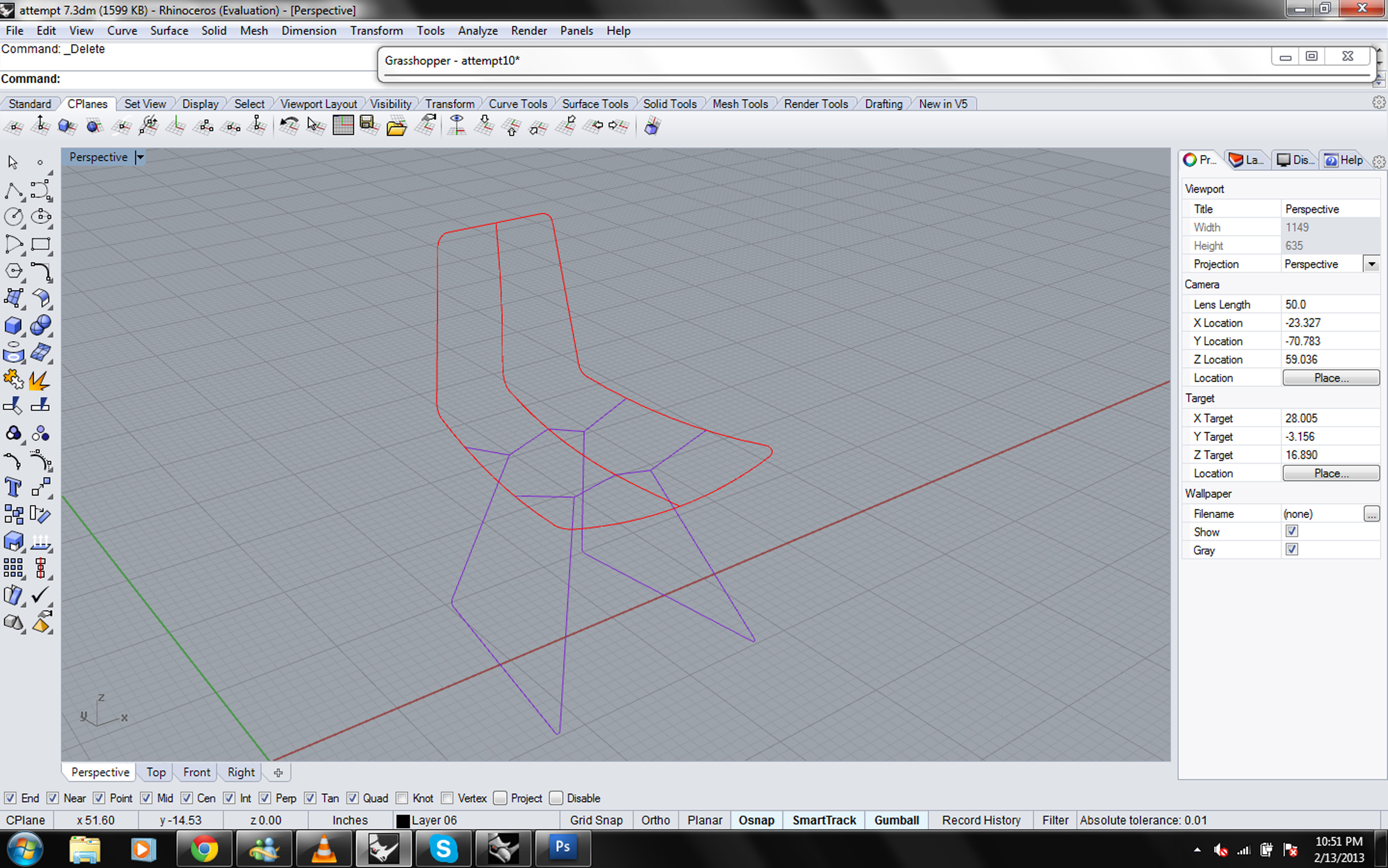
Here are some images of the coconut chair (by George Nelson) and the Rhino modeled chair.
First attempt was through modeling a solid and using boolean (failed), and the second attempt was through making the planes through curves that extruded to a solid cap.
Unfortunately, the way I built the chair in Rhino does not allow me to manipulate in grasshopper (another fail)… Instead of rebuilding the Rhino model again, I will try to pick points and planes on the model through grasshopper and manipulate the following 5 design drivers:
1) extension of the three corners
2) amount of legs
3) width of the chair
4) height of the back of the chair
5) thickness of the chair

parametric seating part 1 – Hugging chair

hugging chair

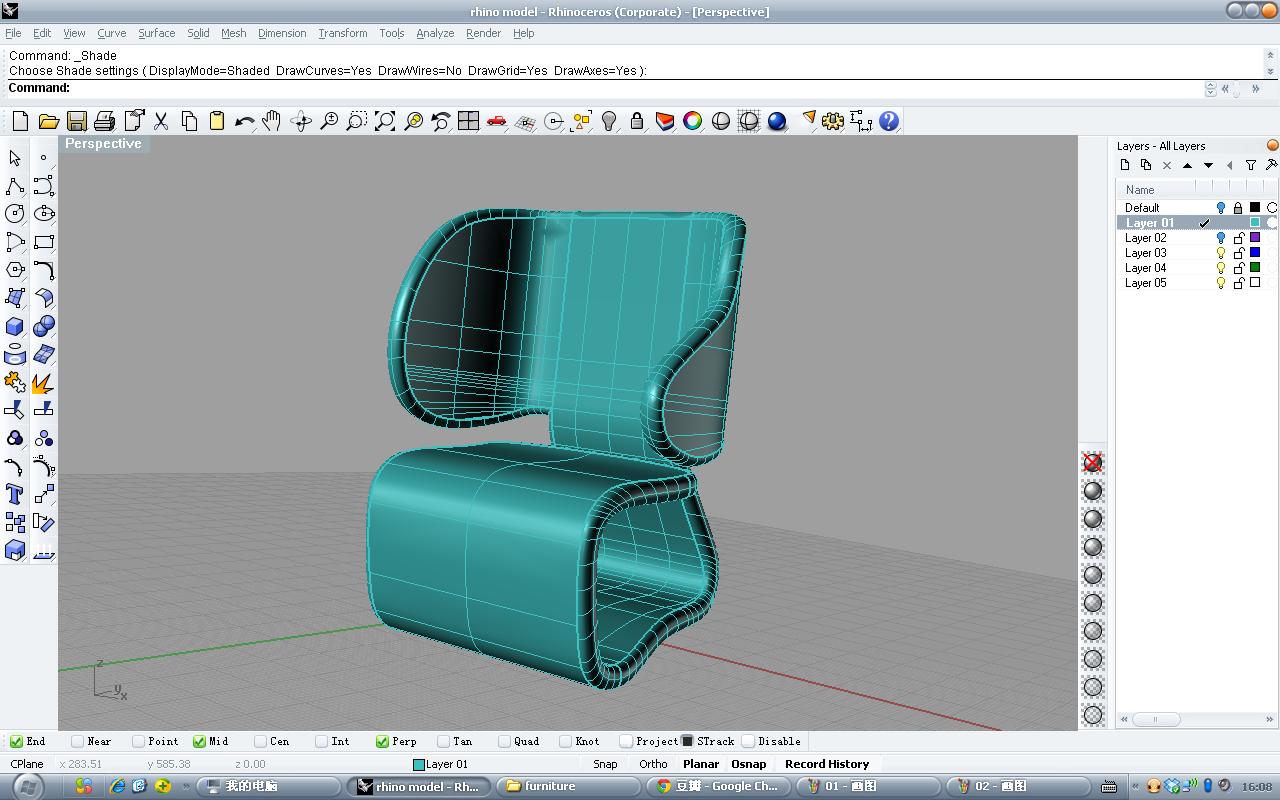
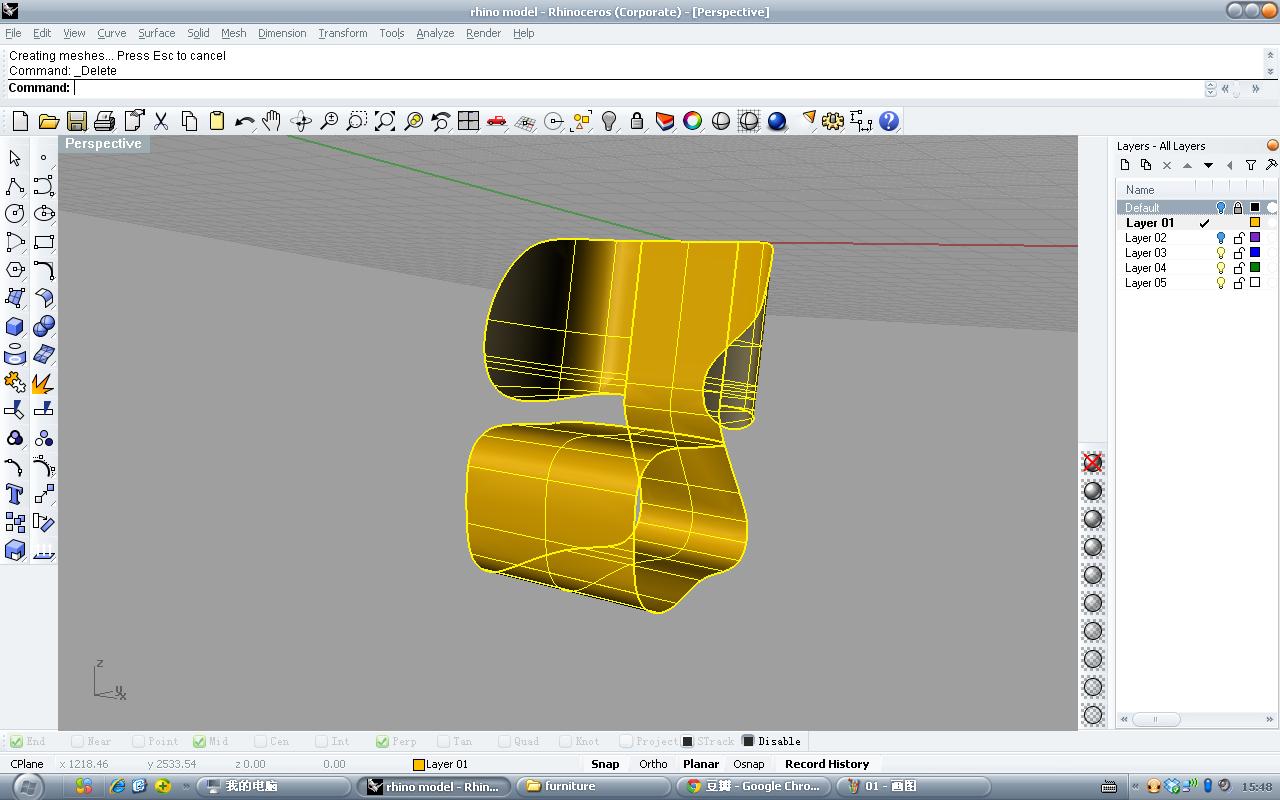
I chose my previous design project for this assignment. This is a reading chair, designed for prolonged, relaxed use.its asymmetrical, curving wings enclose the user in a space that feels secure: one feels embraced by the chair, or perhaps held in a large hand. One feels almost taken care of by the chair. It’s a space that helps the user achieve a special level of calmness and relaxation.

rhino model 1

rhino model 2

rhino model 3

I built a new digital model based on the original hand made prototype.

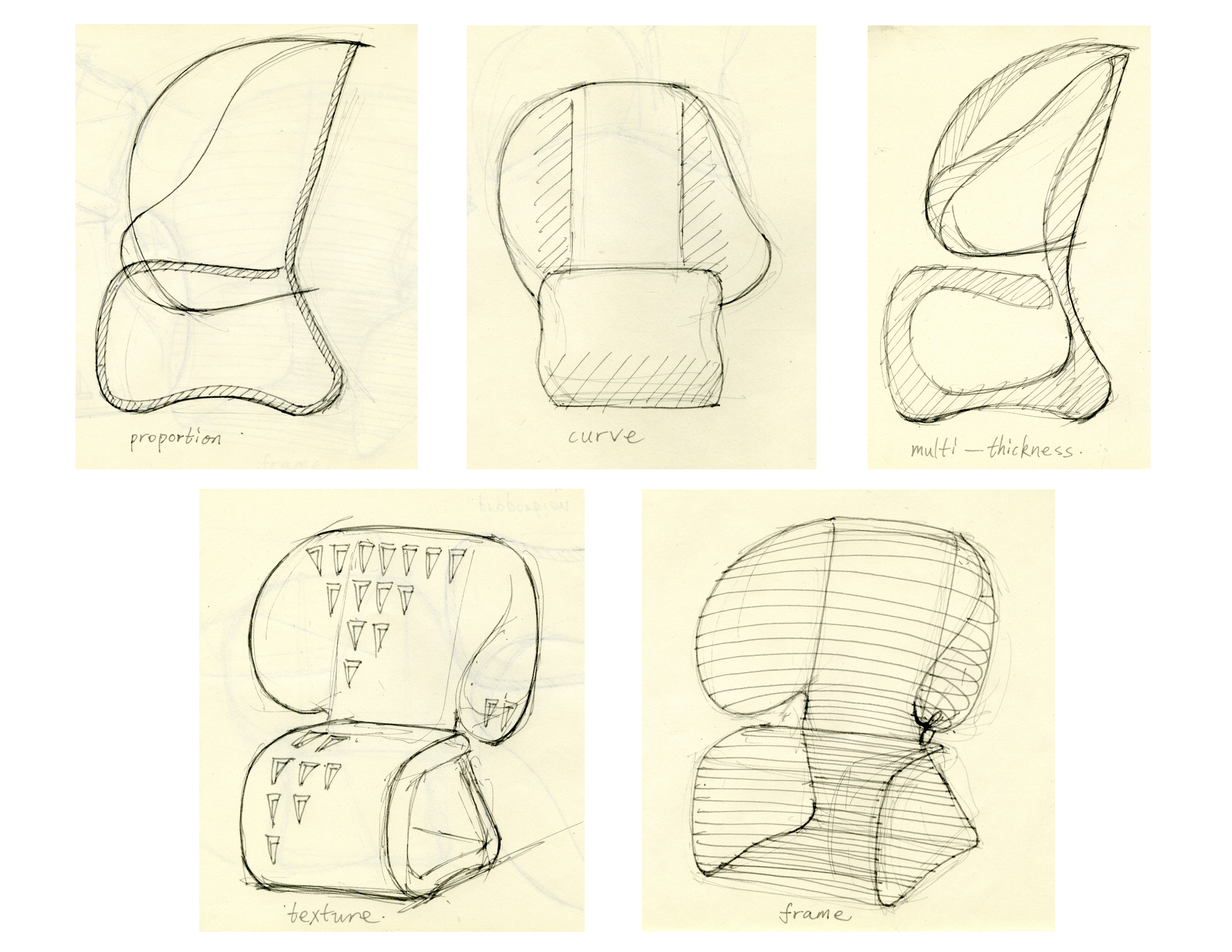
5 design drivers
The five design drivers focus on proportion, curve, multi-thickness, texture and frame, to explore more possibilities of this chair design.

Parametric Seating

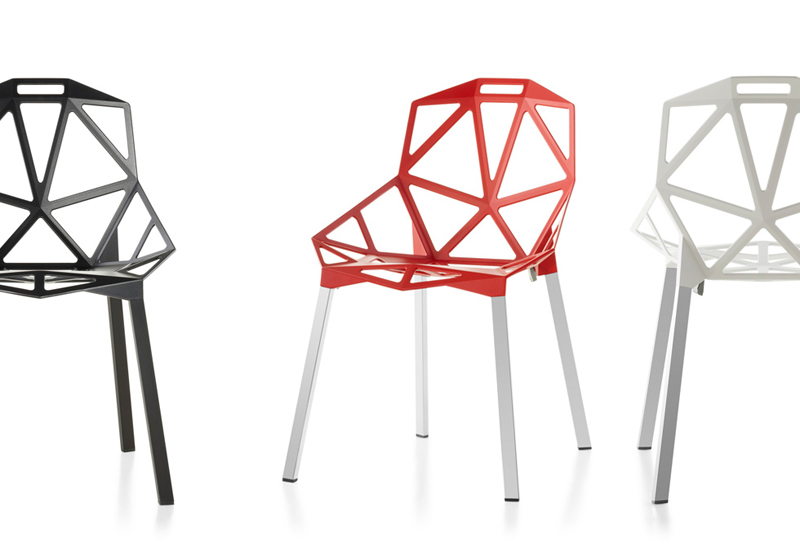
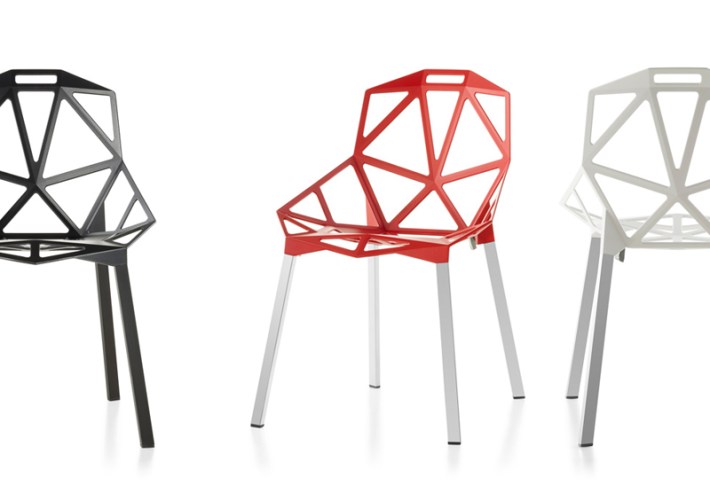
For the Parametric Seating Assignment, I chose to use Konstantin Grcic’s “Chair One”.
Image

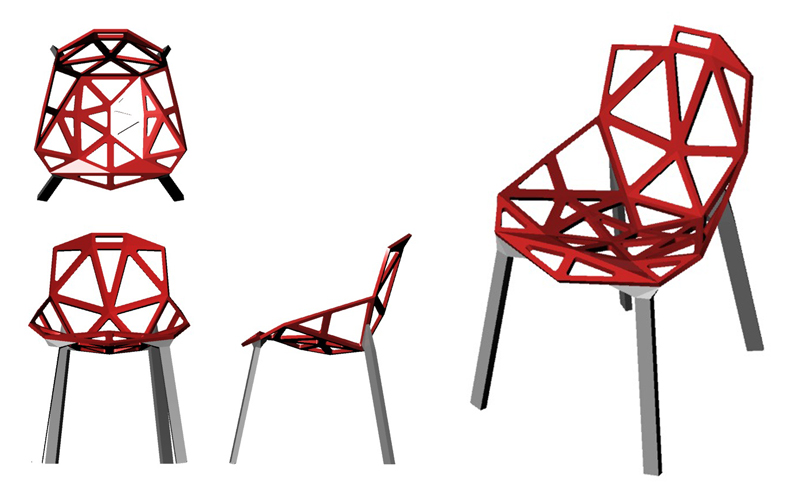
Below are several rendered views of the model I built in Rhino.

ChairOne Rhino Rendering

I will use Grasshopper to alter this model according to the below design drivers:

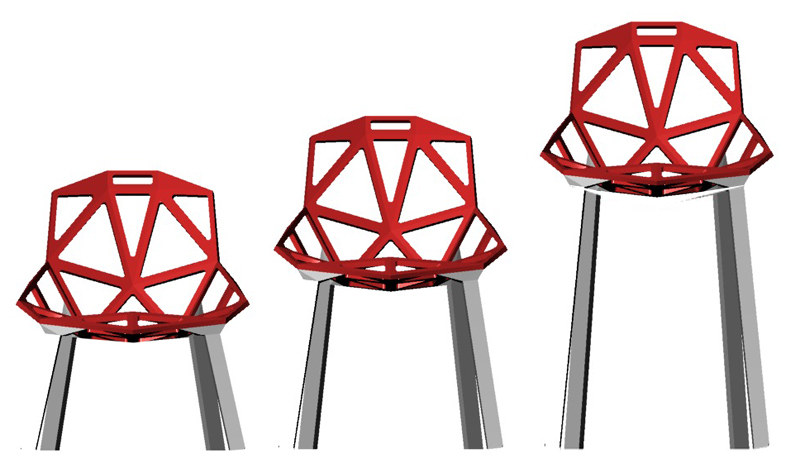
(1) HEIGHT – I will alter the height of the chair by increasing the length of the chair legs, while maintaining the distance between each of the legs on the ground.
ChairOne height adjustment diagram

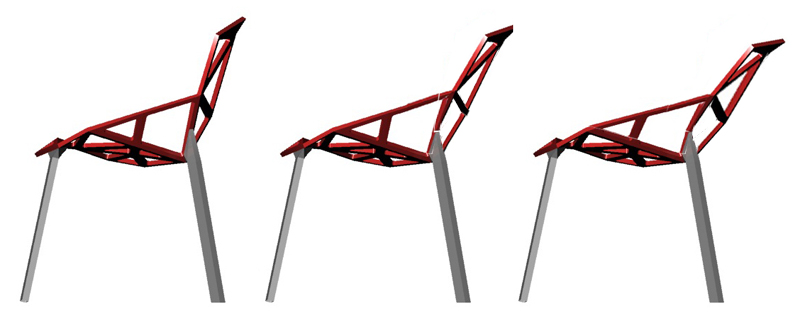
(2) BACK TILT ANGLE – I will alter the tilt angle of the back of the chair.
ChairOne back tilt diagram copy

(3) CUT-OUT SIZE – I will alter the sizes of the triangular cut-outs in the surface of the chair to fill in or open up the surface of the chair.
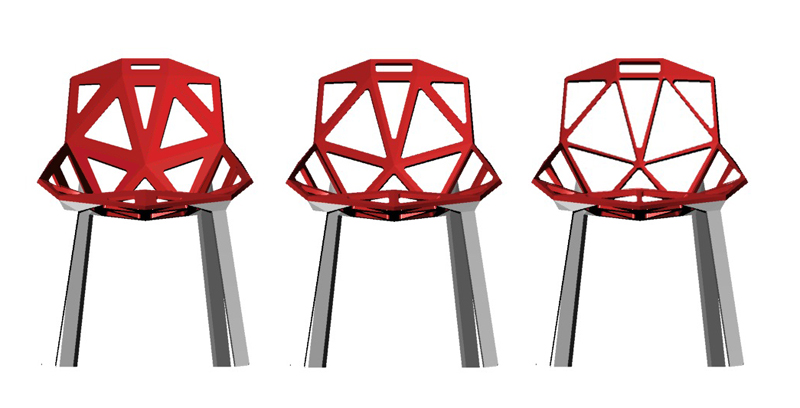
ChairOne thickness adjustment diagram

(4) SUBDIVISION – I will create a driver to subdivide each triangular cut-out into three smaller triangular cut-outs.
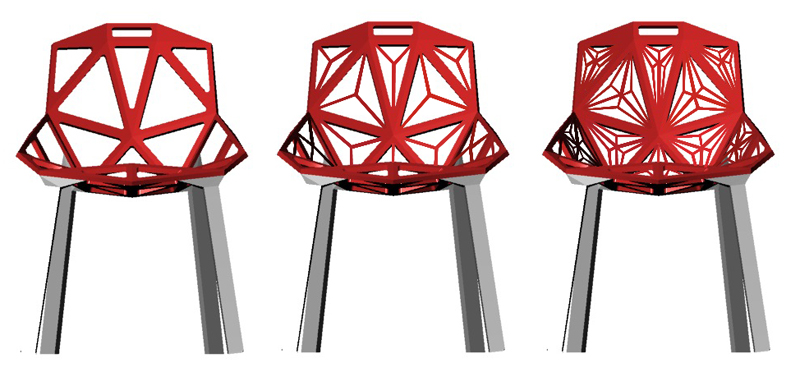
ChairOne subdivision diagram

(5) SEAT WIDTH – I will alter the width of the seat so the chair can be transformed into a loveseat or a longer bench. I will increase the length of certain of the triangular “legs” to make the chair wider. I will set a limit for the length of these legs. I’ll use a Boolean operation to identify when that limit is reached and trigger a subdivision of the triangles that contain that leg.
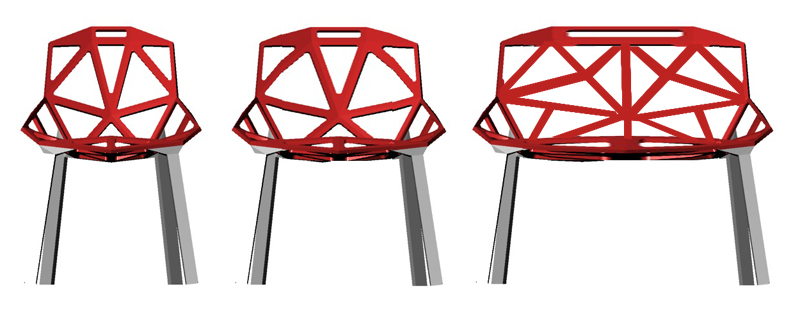
ChairOne width adjustment diagram

– Justin Crocker
Parametric Seating Assigment Part 1 – Spring 2013

Parametric Seating Part 1-a

Parametric Seating Part 1-b

Parametric Seating- Ruth Rocker

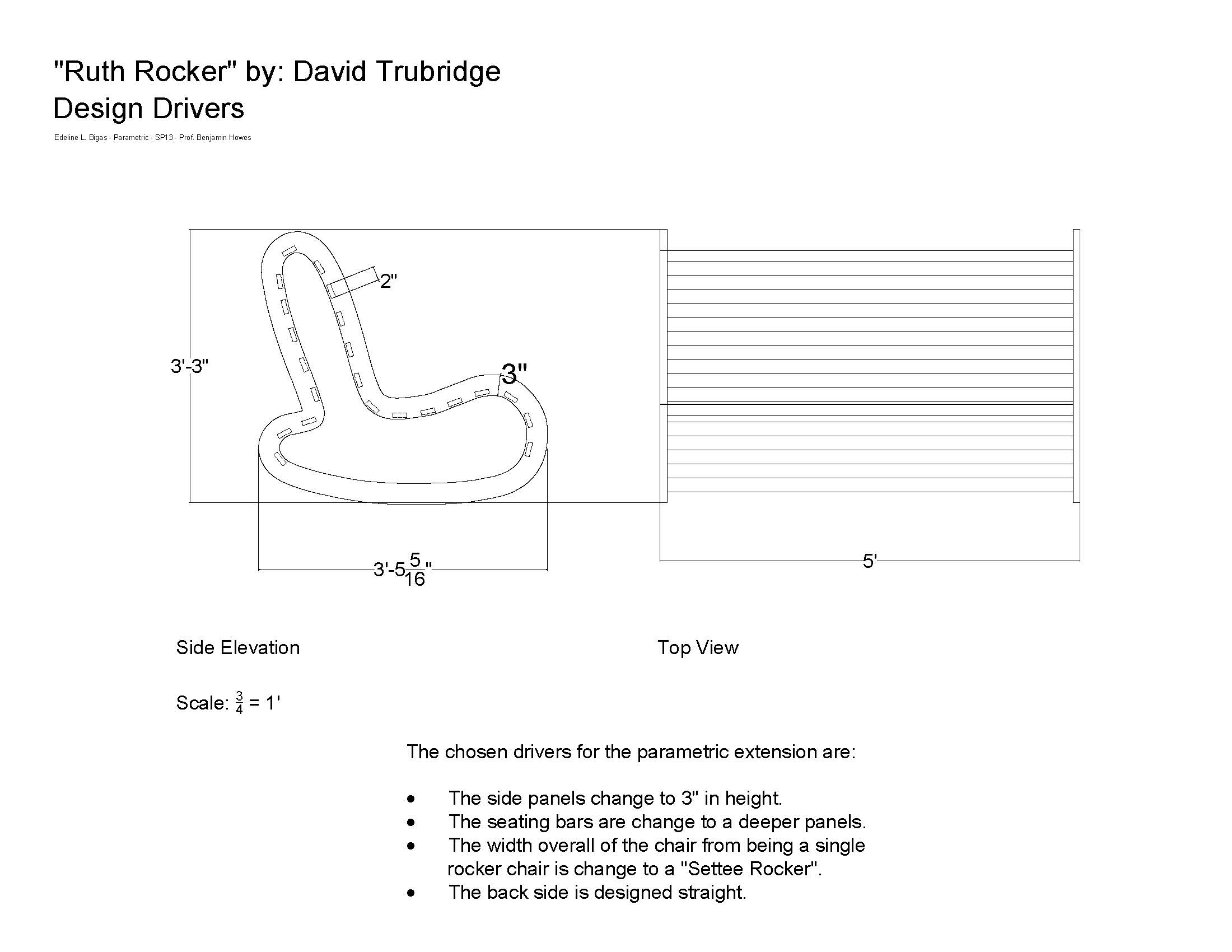
For the Parametric Seating assignment I chose the Ruth Rocker designed by David Trubridge. I like the organic form and the beauty of the simplicity functionality of the chair. For the assignment, I chose to design four drivers that will change the original characteristic. In the images above, it shown the analysis, the designed drivers and the surface model of the chair.